

By Correspondent
The Constitutional Court’s decision last week to reserve judgment on two crucial constitutional challenges linked to Constitutional Amendment Bill Number 3 (CAB3) has placed Zimbabwe at a critical legal and political crossroads.
The two applications before the Constitutional Court were brought separately by war veterans and former Binga North legislator Prince Dubeko Sibanda.
At the heart of both cases is the argument that Parliament and the President acted outside the bounds of the Constitution in their handling of CAB3.
The first application by Sibanda challenges Parliament for gazetting and conducting public hearings on an ‘unconstitutional’ amendment bill.
The second accuses President Emmerson Mnangagwa of failing to protect and defend the Constitution after chairing a Cabinet meeting that discussed CAB3.
The Constitutional Questions at the Centre of the Dispute
Central to both applications is the contention that the proposed amendments, which seek to extend the term of office of the President from five to seven years, are unconstitutional according to Section 328(7) of the 2013 Constitution.
Section 328(7) prohibits any incumbent office-holder from benefiting from a change to term-limit provisions.
It states that if a constitutional amendment extends the length of time a person may hold a public office, that extension does not apply to anyone who held or occupied that office before the amendment.
The legal argument advanced by the applicants, therefore, cannot be dismissed lightly. Zimbabwe’s Constitution clearly places an obligation on both Parliament and the President to uphold, defend and respect constitutionalism.
If there are credible allegations that the two failed to defend and uphold the Constitution, it would result in serious consequences, including impeachment.
Parliament Risks Entering a Constitutional Grey Zone
Chief Justice Elizabeth Gwaunza, leading the Constitutional Court bench, reserved judgment in both matters.
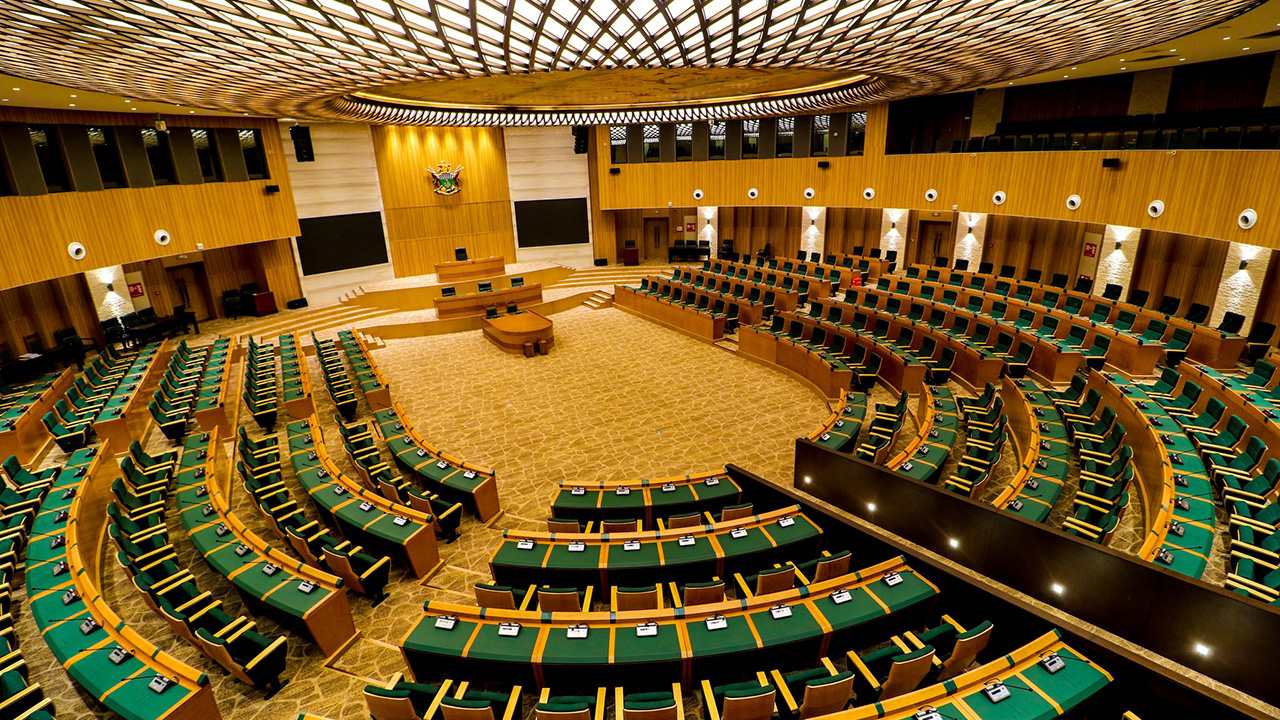
In the meantime, Parliament, which recently adjourned, is expected to resume sitting on the 2nd of June, with debate on CAB3 likely to dominate proceedings.
That creates a potentially delicate situation.
If Parliament proceeds with debating and eventually voting on the bill before the Constitutional Court has pronounced itself, the country risks entering a constitutional grey zone where political processes overtake judicial oversight.
The parliamentary process could culminate in the bill being passed and sent to the President for assent before the courts have had an opportunity to determine whether the process itself is constitutional.
Avoiding Dangerous Assumptions About Parliament’s Motives
However, it is equally important that there should never be an assumption that Parliament or the movers of CAB3 are deliberately attempting to rush the process ahead of the courts.
Such assumptions, while understandable in a politically charged environment, can unnecessarily erode public confidence in State institutions and deepen polarisation.
Parliamentary business follows constitutional timelines and procedures, and lawmakers may well argue that they are merely carrying out their legislative mandate as prescribed by law.
Yet even without any improper intentions, perception matters greatly in constitutional democracies.
If the legislative process advances too quickly before the Constitutional Court delivers its judgments, many citizens may still view the process as an attempt to render the pending court applications meaningless.
That perception alone can damage public trust in both Parliament and the judiciary.
Respect for Constitutionalism and Separation of Powers
This is precisely why Parliament must exercise restraint and temporarily halt all proceedings related to CAB3 until the Constitutional Court delivers its rulings.
Doing so would not weaken Parliament; rather, it would demonstrate respect for the rule of law, constitutionalism and the doctrine of separation of powers.
Allowing the Constitutional Court process to conclude first would also strengthen public confidence in both the judiciary and Parliament.
Constitutional amendments of this magnitude are too important to be rushed through under a cloud of legal uncertainty.
Why Waiting for the Court Matters?
For many who followed the Constitutional Court hearings, the applicants’ lawyers presented compelling arguments that appear to raise serious constitutional questions, and the ruling can go either way.
In many democracies, when courts are confronted with such disputes, they would ordinarily issue a prohibitory order stopping legislative proceedings until the matter is resolved.
Zimbabwe’s democracy can only mature if institutions show mutual respect for constitutional processes.
Parliament should therefore pause the CAB3 process and wait for the Constitutional Court to make its ruling.
Anything less risks undermining the very Constitution lawmakers claim to be amending in the national interest.
———————————————————————————————————-
Love what we do? We’re dedicated to opening up democracy, one article, video and story at a time. If you find our reporting helpful, you can support the Magamba Network team by buying us a coffee. It’s quick, easy, and makes a real difference!
————————————————————————————————————