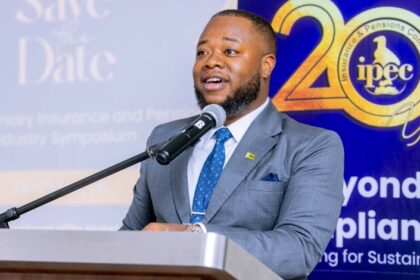


Zimbabwe’s youth face high unemployment.
The country, with its mineral resources, strong agriculture, tourism, and skilled workforce, has significant development potential.
Its main economic sectors are mining, manufacturing, agriculture, and tourism.
However, university graduates do hustle side jobs to survive, including in the capital Harare.
While residents living in communities near mining areas do still struggle against the cost of living.
Peri-urban traders face similar living costs and experiences.
American Opportunities
On Thursday, January 22, General Dagvin Anderson, Commander of U.S. Africa Command (AFRICOM), placed a strong emphasis on trade and economic development during discussions with officials from various U.S. government agencies.
This was at a series of meetings held at the National Defense University in Washington, D.C.
Through these inter-agency conversations, Anderson reinforced the importance of leveraging economic opportunities and fostering trade relationships as vital strategies for advancing U.S.-Africa cooperation.
His approach highlighted the shift by the Trump Administration, from traditional aid to proactive investment and business engagement, reflecting the priorities expressed by African leaders and supported by U.S. policymakers.
What is his plan? His plan is for American companies to create real jobs in Africa while securing the region.
On the day of the forum, and with special U.S. Department of War (DoW) clearance, I entered Fort Lesley J. McNair, a military installation where the National Defense University is located—the location of the inter-agency dialogue.
My hosts convoyed me through security. Inside, an inter-agency dialogue buzzed. Anderson had returned from visiting 11 African countries in five months.
Leaders there delivered a clear message, which was, to bring U.S. businesses to invest, not just aid. He listened to African leaders. Now he said he is acting.
S. Congress stands firmly behind this security-commerce approach.
Senate Foreign Relations Chairman Risch praised it one-day after the conclusion of the inter-agency dialogue.
Commerce and Security
He said in a 23 January press statement, “I applaud how the Trump Administration is pursuing commercial and security gains in the region.”
They see American companies investing where security holds.
However, in Uganda and Tanzania already Senator Risch is asking for U.S. policy towards the two countries to be re-reviewed.
Thursday’s dialogue brought many stakeholders together, including private sector representatives.
Finance leaders. Manufacturing intelligence. Mining experts.
While the forum is traditionally held as an annual meeting, this year marked a significant milestone with the U.S. Commerce Department participating at the table for the very first time.
Their inclusion brought a new dimension to the discussions, emphasizing the importance of commercial diplomacy and private sector engagement in advancing economic development and trade partnerships.
This unprecedented involvement highlighted a shift towards leveraging U.S. business expertise and investment to support broader U.S.-Africa cooperation initiatives.
Commerce Mapping Priorities
David Fogel leads their global markets team. Commerce now maps DoW security priorities, then directs businesses straight there. Fogel said they are working towards deals.
State Department’s Nick Checkers stressed country-by-country focus. Mobilize private investment fast where it counts most.
The State Department now has an office which is focused on commercial diplomacy.
Anderson made the military pledge direct. “How do we engage with State and Commerce in new ways?”
His deadlines also are in the planning.
Three months from now, he plans for AFRICOM to structure at its headquarters to meet the inter-agency implementation.
Six months from now, he said investment pipelines should be in play to flow to Africa.
Zimbabwe’s youth know the stakes. Terrorism is present next door. Northern Mozambique suffers ISIS attacks in its Cabo Delgado provinces.
Mines close. Factories empty. Jobless youth join fighters for cash in West Africa.
Eastern DRC provinces face the same where M23 and ADF displace families and work for local communities vanishes.
Anderson named this his top concern.
“Terrorist threat growing across the continent. Not one region.
From his role as the commander of American troops in Africa, he says he sees impacts everywhere through migration and illicit trade.
” [The Department of] Commerce changes the equation.
Fogel, representing the Department of Commerce at the inter-agency forum, emphasizes that American businesses are keen to play a role in job creation job in mines, factories, and other economic sectors.
His air and joint force military background and experience sheds light on how he sees things.
Fogel views air power as critical.
He believes it enables African partners across vast domains. For example, drones might help secure Mozambique mining zones.
With investments, factories might restart. Jobs might return to communities.
This resonates with Anderson himself.
“We do care. AFRICOM does care.”
“I’ve got two girls, they’re in college. They have the brightest future ahead of them. I only want the best for them. Looking ahead, there’s an uncertain future, and so we have to address that, and we have to do things now.
“We have to do things together. Every one of us has children that we want a better future for. It doesn’t matter where you live.
“It doesn’t matter if you’re in Africa or America. How do we create a better future for our children? And that, I think if we can come together and think about that and cut through some of these other issues and really focus on, how can we make a better environment for our children?”
Anderson’s roadmap rolls out fast.
By the second quarter of 2026, investment channels may open wide. This would mean job creation for youth.
U.S. firms will be seeking a positive investment environment. U.S. agencies such as DFC, MCC, and others will be involved and help businesses create jobs.
Commander Anderson’s credibility stems from his distinguished career, including eight joint assignments, piloting experience, and expertise in special operations. Now investment catalyst.
African leaders asked for this security and commerce, trade, and economic development.
They expressed this to him in the engagements he had with them on official travel to the 11 countries, since August 2025.
Congress backs it. Commerce directs the flow. While AFRICOM will operationalize security for the investors.
From his view, university graduates would be employed in their careers of choice.
Youth engaged in mining would have steady pay. No more hustling. He views security as clearing the path while U.S. commerce delivers the jobs.
Engaging on all these issues, be it youth employment, job creation, trade, or economic development, Anderson finds energy in the engagement.
On the issue of youth employment, that window may very well be opening now―where security meets prosperity.
Disclosure Statement: This article draws from exclusive interviews with AFRICOM Commander General Dagvin, Commerce’s Mr. David Fogel, and State Department’s Mr. Nick Checkers, conducted by Pearl Matibe at National Defense University, Fort McNair, 22 January 2026. Full conversation details are available: The Shaka Spear XSpaces Season One, Episode 8 – ” Episode 8 | Win-Win Africa Security Cooperation: Prosperity from Partnership” Also titled: “AFRICOM: The Conversation with Combatant Commander Anderson” (25 January 2026).
Pearl Matibe is a Washington, D.C.-based geopolitical analyst and correspondent covering Congress, the Pentagon, State Department, and White House, with expertise in foreign and defence policy. Follow her on Twitter: @PearlMatibe.