
By Correspondent
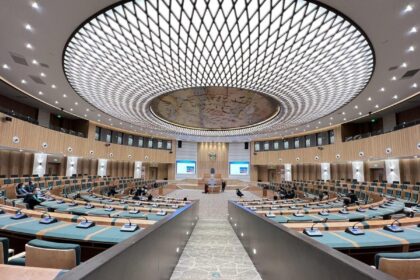
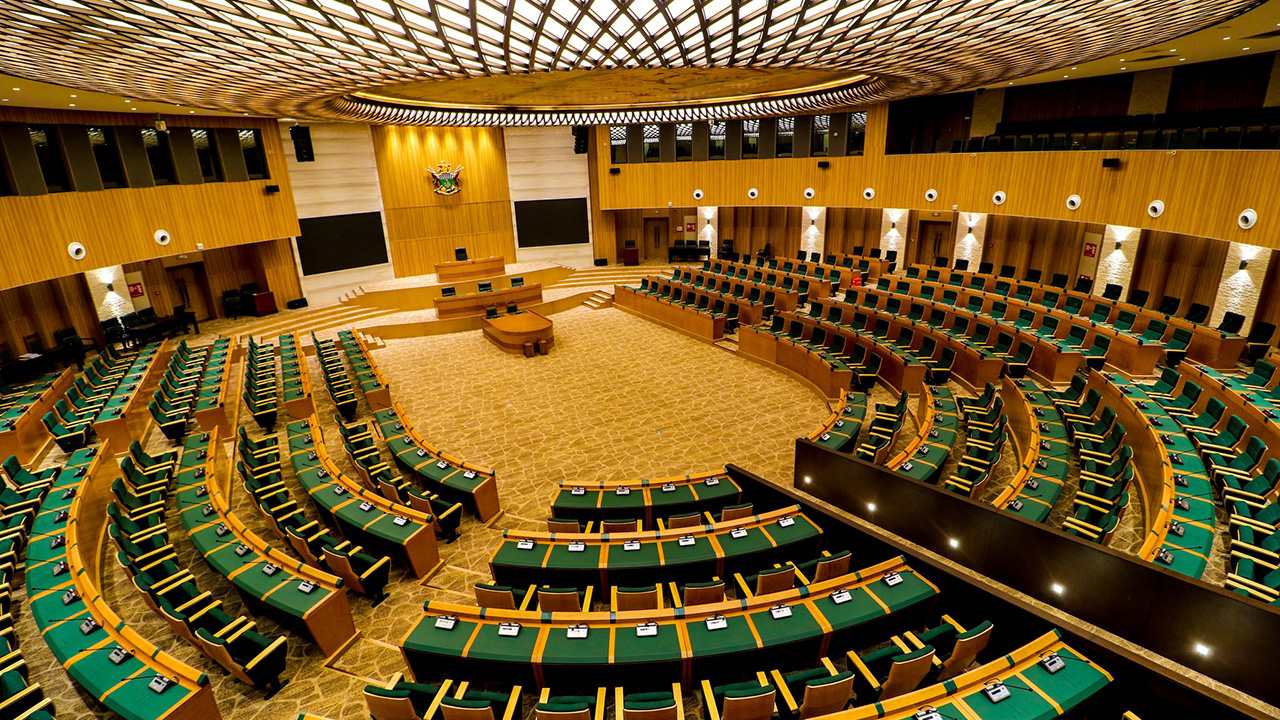
Following the conclusion of nationwide public hearings on Constitutional Amendment Bill No. 3 (CAB3), a longstanding constitutional question has resurfaced: Does Zimbabwe still need the Senate?
The debate has been sharpened by a controversial proposal to expand presidential powers to appoint senators.
This has raised broader concerns about governance, accountability, and the role of the upper house in Zimbabwe’s democracy.
Zimbabwe’s Senate was reintroduced in 2005 after having been abolished in 1989.
It was justified as a revising chamber meant to provide oversight, improve legislative quality, and represent diverse interests, including traditional leaders, women, and people with disabilities.
However, critics have long argued that the Senate has failed to meaningfully distinguish itself from the National Assembly.
It often duplicates processes without significantly altering legislation or strengthening accountability.
Thus, the CAB3 proposal to allow the President to appoint ten additional senators, bringing the total to ninety, has intensified scrutiny.
The Pro-Camp
Supporters of the amendment argue that strengthening the Senate through strategic appointments could finally allow it to fulfil its intended purpose.
By bringing in individuals with specialised expertise in areas such as law, economics, public health, and environmental governance, the Senate could enhance the quality of legislative review and policy oversight.
This is particularly relevant in a complex governance landscape where technical knowledge is increasingly necessary to address national challenges.
The appointments could also widen the pool of potential ministers.
This will enable the Executive to draw from experienced professionals beyond electoral politics.
In a polarised political environment, such provisions are seen as a possible pathway to inclusivity, bringing in voices that might otherwise be excluded from mainstream political processes.
If implemented transparently and based on merit, proponents say, the reform could restore public confidence in Parliament as a competent and representative institution.
Yet, these potential benefits are overshadowed by deep concerns about the implications for democratic governance.
The Contrary View
Allowing the President to appoint more Senators risks tilting the balance of power further toward the executive.
Analysts warn that such a move could weaken the principle of separation of powers by increasing Executive influence over the legislative branch.
Rather than acting as an independent check on government, the Senate could become an extension of presidential authority, particularly if appointments are used to reward political loyalty.
This concern has been echoed in submissions made during the public hearings, where participants questioned whether expanding the Senate in its current form serves any meaningful democratic purpose.
Beyond governance concerns, the Senate’s relevance is also being challenged on economic grounds.
Maintaining an upper house comes with significant public expenditure- salaries, allowances, and operational costs at a time when Zimbabwe faces pressing socio-economic challenges.
Critics argue that these resources could be better directed toward essential public services, especially if the Senate is not demonstrably adding value to the legislative process.
This has led to renewed calls from some quarters for the complete abolition of the Senate, reverting to a unicameral system that is more cost-effective and potentially more efficient.
Fresh Concerns
While the Senate was designed to enhance representation, particularly through reserved seats for women and traditional leaders, the proposed amendment raises fresh concerns.
The introduction of additional presidential appointees without clear safeguards could dilute gains made in gender parity.
Without a mandatory quota for women, there is a risk that the composition of the Senate could become less inclusive over time.
This has sparked debate over whether the current reforms strengthen or undermine the Senate’s original purpose as a platform for broader representation.
At the heart of the debate is a fundamental question: should Zimbabwe reform the Senate to make it more effective, retain it in its current form, or abolish it altogether?
An Alternative Perception
Some governance experts argue that the issue is not the existence of the Senate itself, but how it is structured and utilised.
They advocate for targeted reforms such as stricter appointment criteria, enhanced independence, and clearer legislative mandates to ensure the upper house plays a meaningful oversight role.
Others remain unconvinced, viewing the Senate as an unnecessary layer in the legislative process that has consistently failed to justify its existence.
As CAB3 moves through the legislative process, the debate over the Senate is likely to remain a central point of contention.
Whether Zimbabwe chooses to strengthen, restructure, or reconsider the Senate altogether, the outcome of this debate will have lasting implications for the country’s democratic architecture.
For now, one question lingers – is the Senate a necessary pillar of democracy, or an institution in need of reinvention?
—————————————————————————————-
Love what we do? We’re dedicated to opening up democracy, one article, video and story at a time. If you find our reporting helpful, you can support the Magamba Network team by buying us a coffee. It’s quick, easy, and makes a real difference!
—————————————————————————————-