

By Correspondent
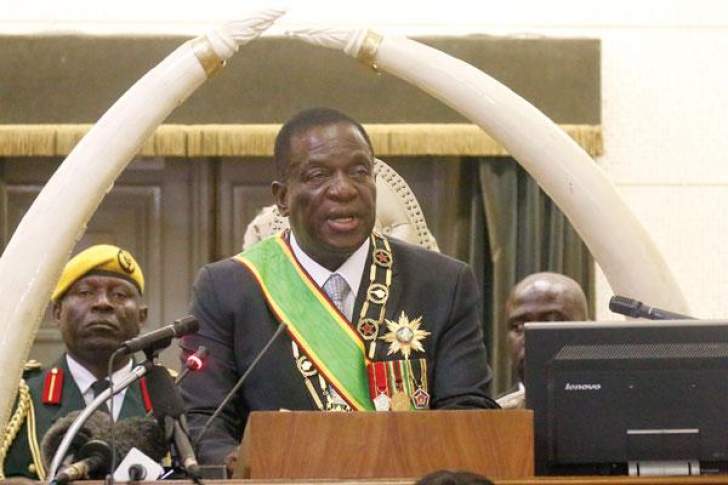
If it was not for the power-cut, many would not have known there was a State of the Nation Address on October 28.
One key component of the State of the Nation Address is that it sets the legislative agenda.
We are just two weeks into the third session of tenth parliament, meaning there was an agenda that was spelt out.
We will break the agenda down and its potential consequence in our everyday life.
Repeal of the Civil Protection Act
Zimbabwe’s current Civil Protection Act (CPA) was passed in 1989 and was amended in 2001.
In its current state, the law centralises disaster response to the Department of Civil Protection, formerly known as the Civil Protection Unit.
The proposal is for the Civil Protection Act to be replaced by the Disaster Risk Management (DRM) Bill.
The DRM Bill is progressive in several ways, it creates localised structures for disaster response starting from the ward, going upwards.
This is opposed to the current setup where the structure starts with the National Director with decisions trickling down.
The Department of Civil Protection is currently funded through disbursements from Treasury and donor support.
The proposed law, is likely to set up a proper structured fund for disaster mitigation and response, through a levy.
National Productivity Institute Bill
The bill proposes the establishment of the National Productivity Institute, whose role will be to ‘drive productivity across sectors.’
It is noteworthy that while there may soon be a law to operationalise this institute or organisation, it does not sound really new.
It has been in the public domain from as far back as 2003.
In 2003, Zimbabwe launched the National Productivity Centre when the economic downturn was still in the early phases.
In 2014, there were reports that the setting up of the National Productivity Institute was in the final stages.
Around May 2017, then Labour Minister Prisca Mupfumira said the same institute was already at work.
Now eight years later Parliament is moving to establish the same.
Maybe this bill, if it becomes a law the National Productivity Institute will become real, with structures and outputs.
The idea is not bad as South Africa, a shining example of productivity, has its own version of the same institute.
Research Act
There are times it feels like decisions in this country are not based on any research, but just vibes.
Even policy design in the country appears intuition based and maybe we could do with a little bit data-driven decision making.
The proposed amendment of the Research Act is meant to ensure there is enough funding for research in Zimbabwe.
Hopefully, this is the beginning of intentional and productive research.
Unlawful Organisations Act (Amendment)
A law tracing its history into the pre-independence era is still in existence but is now due for amendment.
The Unlawful Organisations Act, enacted on 15 October, 1971, was meant to outlaw radical nationalist movements.
In independent Zimbabwe, the law continued to exist and up to now it has quietly remained part of the statutes.
One of the key provisions is that the President can declare any organisation to be unlawful, in the interest of public order, public safety and public health in Zimbabwe.
Now it has been put up for amendment, there is need to keep an eye on the proposed changes because it could be coming in to strengthen the function of the Private Voluntary Organisations (PVO) Act, which was amended in April 2025.
This cocktail of statutory adjustments could be to keep a very close control over the democratic space and the civic society environment.
Treaties
In addition to laws, there are protocols, treaties and agreements that Zimbabwe is signatory to.
However they do not gain force or effect unless ratified by Parliament.
The following key Protocols, Treaties and Agreements will be brought for ratification during the third session of the tenth parliament.
Protocol Amending the TRIPS Agreement
Known as the TRIPS agreement, the The Agreement on Trade-Related Aspects of Intellectual Property Rights is an international agreement that governs the protection of intellectual property rights.
In 2005, the treaty was amended to allow what are called compulsory licenses.
These give room for Governments to allow a company to produce the patented product or process, without the consent of the patent owner.
This happens mostly in times of medical crises, where a formulation can be the only solution to a public health emergency.
When this comes to force, this means local pharmaceutical players will now be able to make generic versions of life-saving medicines in the event of a medical emergency or public health need.
Lisbon Treaty on Appellations of Origin and Geographical Indications
This is the international agreement that recognises the geographical location of commercial products; for example Swiss Chocolate, Scotch Whiskey or Bordeaux Wine.
Zimbabwe has unique products that come from specific areas that can be marketed this way at a global level.
For example tea from Aberfolyle in the Eastern Highlands or Mazowe, which is named after the farming town where oranges for the world famous orange juice were extracted.
Appellations of origins have a dual effect of marketing both country and product, which could be a good opportunity for brand Zimbabwe, as well as the unique products made within the country.
Hague Agreement – Industrial Designs
This is a system that allows the international registration of industrial designs.
It means innovators will be able to register their ideas and will be globally recognized, even if they are Zimbabwean-based.
Quite a progressive idea, as there are many incredible ideas among young Zimbabweans that are at risk of appropriation.
This can be a good preparatory move in anticipation of the operationalisation of the Africa Free Continental Trade Area.
There is still room for citizens to influence how the bills turn out, through contributions to public consultations that are done physically in all provinces and virtually.
It is only through participation that citizens can shape their laws and help design a society that works for them.