
By Correspondent
The language in Justice Minister Ziyambi Ziyambi’s draft amendments to the ZANU PF constitution gave it away.
“The party is the principal political authority.”
It is not a phrase from Lancaster House but straight from Beijing.
Article 1 of the Chinese Communist Party constitution says the Party is the highest force for political leadership.
ZANU PF is no longer trying to win elections because it has effectively destroyed the opposition through infiltration.
It is trying to end them as we know them and replace the Westminster system it inherited with a Chinese system where the Party rules the State, and the Party Leader rules the Party.
Party Supremacy Over State
The most radical clause in Ziyambi’s lays it bare.
“The President and other officials must ensure to the fullest extent permitted by law that government policies, programmes and legislative initiatives are consistent with and give practical effect to the ideology, resolutions and policy decisions of the party.”
That is word-for-word the CCP principle of dang guo yiqiet the Party leads everything.
Under the current Zimbabwean constitution, a ZANU PF MP swears allegiance to Zimbabwe, not to ZANU PF.
Under CAA3 plus the ZANU PF amendments, an MP who votes conscience over party line can be subjected to “party disciplinary procedures” even if he is a Minister, or the President.
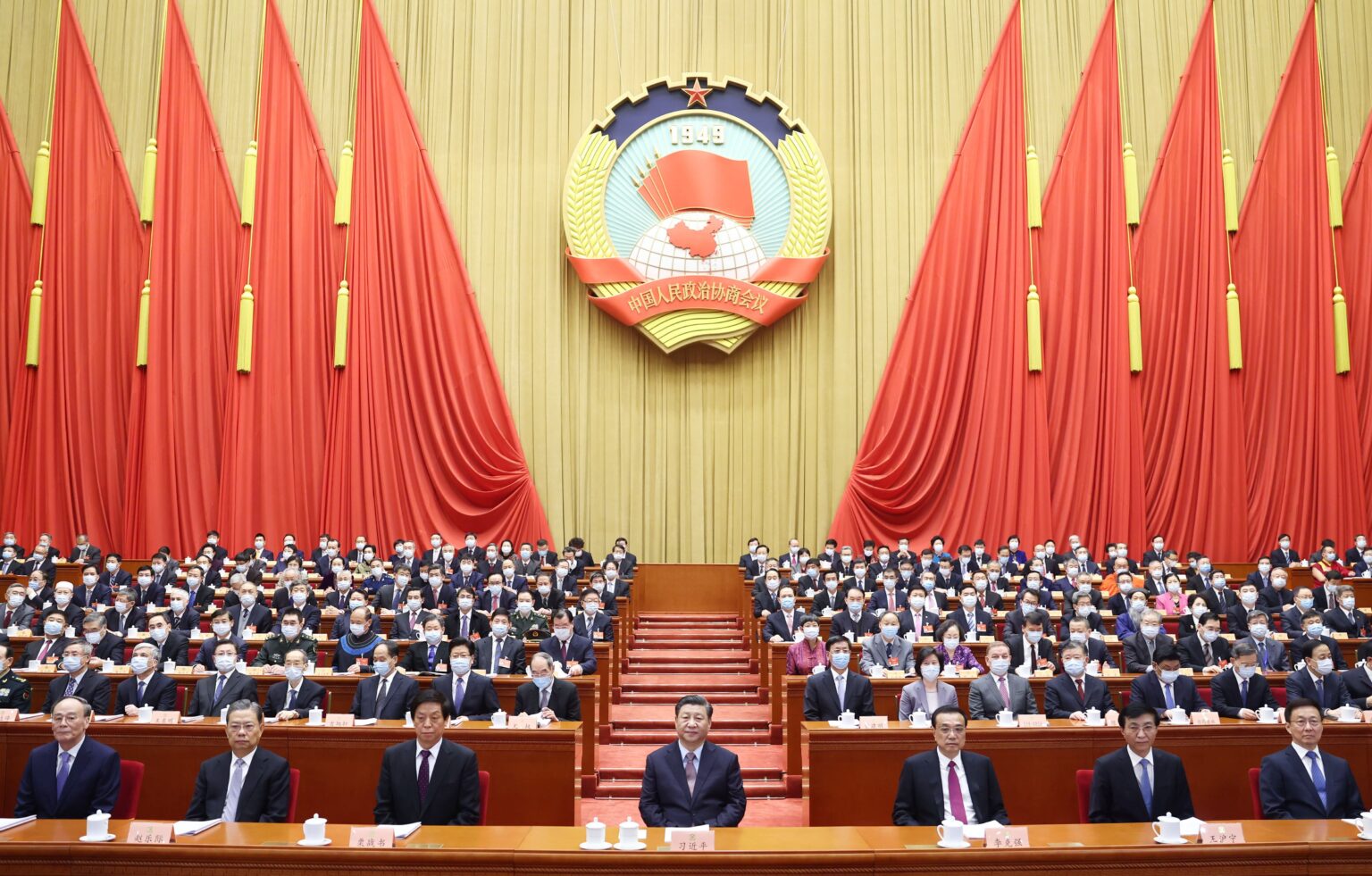
In China, the National People’s Congress never defeats a CCP resolution.
ZANU PF wants the same for Parliament.
This explains why Speaker Jacob Mudenda was furious the draft whittles down the Speaker to a party commissar whose job is to ensure Parliament rubber-stamps Politburo resolutions.
The Nyerere/Xi Model
Ziyambi’s team is selling the separation of Party President and State Presidential candidate as the “Nyerere Way.”
Julius Nyerere stepped down as Tanzania’s State President in 1985 but remained CCM Chairman until 1990.
But the real model is Xi Jinping’s predecessor, Deng Xiaoping.
Deng never held the presidency or premiership after 1981, but as Chairman of the Central Military Commission and Paramount Leader, he was the ultimate authority.
Mnangagwa’s loyalists want him to become Zimbabwe’s Deng, staying on as Party President after 2029.
He will retain control over the military, the party, and the Politburo, while a younger, weaker figure sits in State House from 2030 having been elected by Parliament, not the people.
Chiwenga’s camp sees it as a trap.
A President elected by Parliament can be recalled by Parliament, if Parliament is controlled by a Party President.
A President directly elected by the people has a popular mandate but a President elected by 280 MPs has only a party mandate.
Why Parliament Now Elects The President
CAA3’s shift from direct presidential election to election by Parliament is not a cost-saving measure.
It is the final piece of the Chinese puzzle.In China, the President is elected by the National People’s Congress.
In reality, the CCP Politburo Standing Committee decides, and the NPC confirms.
If Zimbabwe’s President is elected by Parliament in 2030, ZANU PF does not need 6 million votes across the country.
It needs 140 loyal MPs.
That is cheaper, easier to control, and eliminates the risk of an opposition presidential candidate with national appeal like Nelson Chamisa forcing a run-off.
Parliament becomes an electoral college that ZANU PF, with its gerrymandered rural majority, can always control.
The Problem With Copying China
Beijing can make this model work because the CCP has 98 million members, a ruthless discipline system, a meritocratic Central Party School, and an economy that delivers growth.
ZANU PF has none of those.
Its attempt to create a Chinese system risks creating a Soviet one, a party with absolute power but no accountability, where provincial resolutions are forged, MPs are bought, and discipline is selective.
That is why the Politburo meeting collapsed.
The old guard war veterans, securocrats around Chiwenga, and institutionalists like Mudenda understand that in Zimbabwe, “Party Supremacy” has always meant “The Leader’s Supremacy.”
And when the Party can discipline the President, it means whoever controls the Party’s disciplinary machinery controls the President.
In China, the Party controls the gun. In Zimbabwe, the gun has always controlled the party.
Chiwenga and the generals have not forgotten that.
ZANU PF wants a Chinese system with Zimbabwean characteristics but what it may get is a Chinese language hiding a very Zimbabwean succession war, fought not in front of voters, but in the corridors of Parliament.