

By Correspondent
The fight over Constitution Amendment No. 3 is now exactly where government wanted it: on procedure, not principle.
On 22 September, the Constitutional Court heard CCZ 273/26, the application by six war veterans.
Reuben Zulu, Godfrey Gurira and four others agitating for direct access to challenge CAA3.
Judgment was reserved.
Note that the state is not yet defending the substance of CAA3.
It is simply arguing that the case should never be heard there at all.
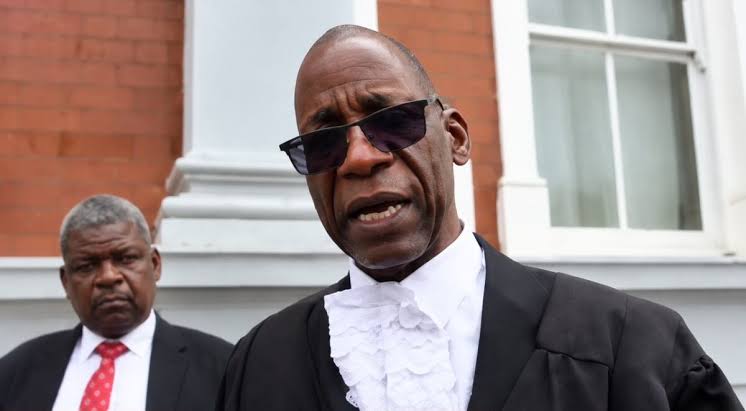
Advocate Sylvester Hashiti, for President Mnangagwa, Minister Ziyambi and Attorney-General Mabiza, told the three-judge bench of Deputy Chief Justice Paddington Garwe, Justices Rita Makarau and Chinembiri Bhunu that the applicants “have not established the basis on which they are before this court” and should have gone to the High Court first.
The state further argues CAA3 is “irreversible” because it has completed all legislative stages.
Prof Lovemore Madhuku, for the war veterans, counters that exceptional national importance justifies direct access.
That is the immediate status: the Court is not deciding if CAA3 is constitutional. It is deciding if it will even hear the challenge directly!
The Outlook
On strict law, the state has a procedural advantage.
The ConCourt has historically been reluctant to grant direct access unless applicants prove they cannot get effective relief in the High Court.
The Attorney-General leaned on that.
On substance, the war veterans have the stronger argument. CAA3 does two fundamental things.
It removes direct election of the President. Section 92 is amended so the President is elected by Parliament sitting jointly, not by voters.
Again, it extends the presidential term from 5 to 7 years, in effect extending Mnangagwa’s current term to 2030.
The applicants argue you cannot take away the right to vote directly for President without a referendum.
Even if Chapter 4, the Bill of Rights, was not textually amended.
Any amendment that indirectly guts a right in the Bill of Rights requires a referendum.
If direct access is denied, the case goes to the High Court.
That will add another 6-12 months.
If it is granted, we move to a full constitutional hearing that will define whether Zimbabwe’s 2013 Constitution can be amended by parliamentary supermajority alone.
Some legal watchers put 70% probability on direct access being denied on technicalities, but the substantive challenge surviving in the High Court.
Political Implications
This is not a legal dispute but a ZANU-PF succession dispute in court robes.
The war veterans bringing the case are aligned to the anti-2030 faction that opposes Mnangagwa’s extension.
The MDC challenge filed by Douglas Mwonzora on similar grounds shows the opposition also sees an opening.
If CAA3 survives, it institutionalizes a parliamentary presidency.
Mnangagwa gets to 2030 without a popular presidential poll, and future presidents are chosen by MPs.
It effectively kills direct presidential contestation and makes control of ZANU-PF’s parliamentary majority the only prize.
If CAA3 falls, the 2030 agenda collapses, a direct presidential election in 2028 becomes mandatory, and the succession battle inside ZANU-PF returns to the electorate.
That is why both sides are asking the ConCourt to shut the door for the other side.
The Court’s judgment on direct access, expected in the next two weeks, will therefore not end the crisis.
It will decide where it is fought and how fast the political temperature rises toward ZANU-PF’s conference.
———————————————————————————————————
Love what we do? We’re dedicated to opening up democracy, one article, video and story at a time. If you find our reporting helpful, you can support the Magamba Network team by buying us a coffee. It’s quick, easy, and makes a real difference!
————————————————————————————————————