By Fanuel James
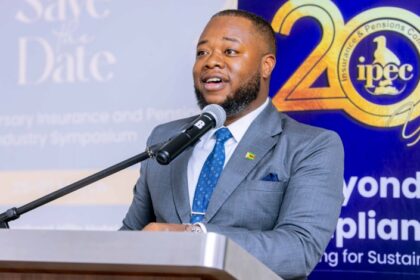
If you want to know what ZANU-PF or specifically President Mnangagwa cannot say in an official statement, go read Temba Mliswa’s X account at midnight. That is his function.
He is not a party official but a deniable official voice, a system that allows President Emmerson Mnangagwa to fight a succession war without ever leaving State House.
Beyond Fixer, He Is The Firewall
Political analysts often describe three layers of power in ZANU-PF today.
There is the constitutional layer comprising the Politburo, Central Committee.
Then there is the coercive layer which has the military, intelligence, war veterans.
The third one has the narrative layer, those who decide what a factional fight is and Mliswa is located there.
Why does Mnangagwa need him? Because the 2030 project is legally complete but politically toxic.
Constitution Amendment No. 3 of 2026 passed and was gazetted on July 7.
It moved elections to 2030 and gave Parliament the power to elect the President among a raft of serious changes.
On paper, Vice President Chiwenga is boxed out but on the ground, the party is in revolt which is why it plans to punish all who failed to take part in the CAA3 Parliament vote.
Meanwhile, Mnangagwa cannot personally accuse Chiwenga of plotting a coup or revolt as that would confirm the split and even trigger military contingency.
He needs someone who can say “procedural coup” and still be dismissed by spokesperson Nick Mangwana as a private citizen if it goes wrong.
Mliswa’s October 9 claim that a clique led by Justice Minister Ziyambi Ziyambi tried to ambush the Politburo is precisely that, a high treason accusation laundered as private commentary.
This is a classic Mnangagwa method.
In 2017, it was war veterans leader Chris Mutsvangwa who said what Mnangagwa could not as a Vice President.
Today it is Mliswa.
The Business Model Behind The Noise
Of course Mliswa is not doing this for free.
His base is Spring Farm, Mashonaland West, 800 hectares of prime land, a tobacco and maize empire, and a disputed ownership history that has seen him fight the state and then be protected by it.
His survival formula is simple: land requires political cover and political cover requires relevance and relevance requires noise.
When he was MP for Norton, his noise was anti-corruption.
He chaired the Mines Committee and exposed the Tagwirei fuel monopoly.
Now that Tagwirei is the central funder of the 2030 agenda, Mliswa has flipped and now defends Tagwirei and the brood of zvigananda as victims of Chiwenga’s persecution.
What changed is not principle, but patronage.
The state capture dossier by Mail & Guardian places him inside the patronage web, not outside it.
He is no longer the whistleblower but is the whistleblower’s bouncer who ensures investigations into election materials contracts, intratek, or fuel deals never become systemic debates.
Instead they are reduced to “Chiwenga vs Tagwirei” personal feuds.
Why Chiwenga Cannot Swat Him
Vice President Chiwenga is rumoured to have the backing of the military component. Tanks, generals, war vets and the symbolism of November 2017.
What he does not have is a civilian social media army.
Instead, his camp communicates in coded Shona proverbs at conferences and leaked Politburo minutes via activists like Jealousy Mawarire hiding behind journalism labels.
Meanwhile, Mliswa is built for the opposite terrain, Twitter/X, where politics is won in threads and articles.
Bombastic and fluid on the keypad he lays bare and says what every other politician is afraid to say.
He live-tweets Politburo postponements, decodes who sat where, drops explicit political content that can end political careers.
Lately he has been dragging George Charamba accusing the Deputy Secretary for Presidential Communications of drafting two contradictory speeches for President and VP, creating “two centres of power.”
That accusation is surgically aimed at the real tension: Is the Presidency speaking with one voice?
If Charamba wrote Chiwenga’s self-critical introduction, did Mnangagwa approve it? Mliswa raised a question that forces State House to clarify, something opposition CCC could never do.
Chiwenga cannot respond to Mliswa without elevating him and if he sues him, he legitimizes him. If he ignores him, the narrative sticks.
Already he has managed to demystify the myth of a fearsome military Chiwenga by staring him in the face and telling him to resign.
The Historical Echo, the Jonathan Moyo Role, But Inverted
There is a precedent.
From 2000 to 2017, Jonathan Moyo was ZANU-PF’s ideologue-for-hire, brilliant, erratic, expelled, recalled.
Mliswa is Jonathan Moyo inverted.
While Moyo used ideas to defend power Mliswa uses scandal to defend power.
Both men share a trait: they are politically homeless, which makes them loyal only to a patron, not a party.
ZANU-PF expelled Mliswa in 2014 and never readmitted him and that is why he is useful.
He has no constituency to protect, no congress to contest and he can say “Chiwenga must resign” something no Politburo member can say and survive.
What His Loudness Predicts
Mliswa’s recent escalation, three attacks on Chiwenga isn’t random.
Mnangagwa will not fire Chiwenga before 2027 as he cannot afford to do that.
Instead, he will use the Mliswa strategy, bleed Chiwenga’s legitimacy through a thousand civilian cuts, isolate his funders as criminals, and present 2030 not as a power grab but as stability against “divisive elements.”
If that fails, Mliswa is disposable and if it succeeds, he gains even more credibility as a power broker in a party he isn’t officially part of.
He is therefore not in the power matrix but is the matrix’s pressure valve, the place where the party goes to scream what it cannot officially say.