
By Correspondent
President Emmerson Mnangagwa’s Constitutional Amendment Bill No. 3 has been a noon-day Mafia job disguised as a people-centred scheme to focus more on development.
It has been both brazen and cynical.
Defiant in the face of uproarious opposition and dismissive of threats of danger arising from undermining the democratic system.
The whole project has been founded on razor-thin arguments, skirting around substantial issues by raising semantic arguments.
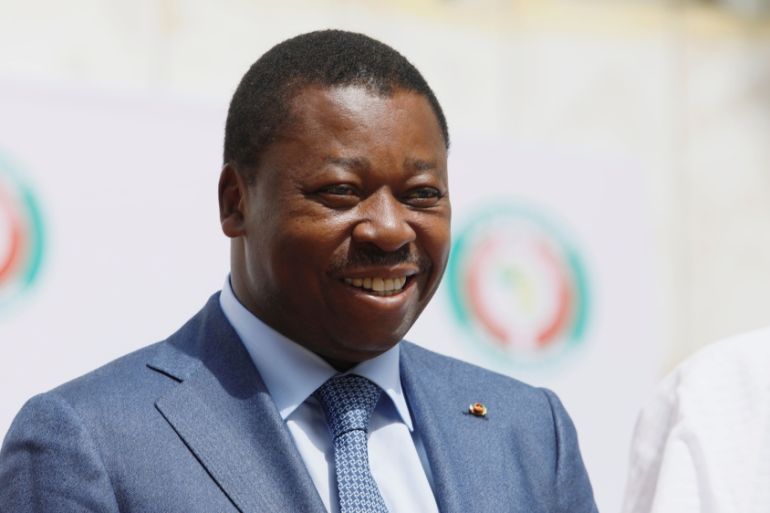
Even more disturbing and yet revealing is how it mirrors another such project done in West Africa’s Togo by President Faure Gnassingbe in 2024.
Having already served the mandated 4 presidential terms, Gnassingbé had come up against a brick wall and sought a way around the challenge.
It’s the same challenge which has inspired Mnangagwa in Zimbabwe.
He is already serving his last term, and the Constitution dictates that he should step down after 2028.
However, Togo’s Gnassingbe has proved an inspiration for him.
Faure’s Machinations
Gnassingbé revised the constitution, abolishing direct presidential elections, replacing them with a parliamentary system to allow him to stay in power without term limits.
On April 19, lawmakers in the National Assembly from the ruling Union for the Republic (UNIR) party adopted the changes to the Constitution.
It was an emphatic vote of 87-0.
The approved Constitution also established a new, powerful executive position of President of the Council of Ministers.
Elected by the National Assembly, this individual will effectively act as the prime minister, overseeing the day-to-day operations of the government.
The President of the Council of Ministers will come from the party with the most seats in the legislature or lead a coalition of parties if there is no single-party majority.
The term of office of the President of the Council of Ministers will be 6 years.
However, as in a parliamentary system, this mandate is renewable indefinitely so long as the ruling power retains a majority.
This removes the stipulation of a limit of two 5-year presidential terms, a key provision in the 2019 Constitution that had been adopted after widespread popular protests.
Mnangagwa’s Copying
If President Mnangagwa signs CAB3 into law, it will allow him to serve until 2030 and, according to critics, has room for indefinite rule.
This goes directly against the spirit behind the 2013 Constitution, which was driven by a desire to avoid a repetition of Robert Mugabe’s decades of rule.
The late Mugabe ruled from Zimbabwe’s independence in 1980 until he was deposed in 2017, a hefty 37 years in power.
While Mnangagwa has consistently denied having any such ambitions, not many believe him, as his party has continued pushing through the Bill.
Even more frightening are the statistics and trends which show a slow regression among many African states.
Growing Trends
According to the Africa Centre for Strategic Studies, more and more African leaders are overstepping the boundaries of term limits by engineering the Constitutions.
Extraconstitutional extensions of power have shaped the contours of Africa’s governance landscape in recent years.
“Leaders of 14 African countries have held onto power for more than two terms after evading term limits.
“This continues a pattern of term limit evasion observed since 2015, reversing an evolving trend of term limit adherence between 2000 and 2015.
Another 8 African countries have endured military coups that suspended or disrupted their constitutions since 2015.
“In none of these cases have the military authorities demonstrated a commitment to relinquishing power, thereby effectively eliminating term limit provisions that had been in place.
Combined with an additional 8 countries that do not have any existing term limit restrictions, 30 out of 54 African countries (56 percent) are operating without functioning limits on an executive’s time in power.
Notably, 18 African countries are actively upholding term limit norms, including the noteworthy case of Nigerian President Muhammadu Buhari, who stepped down after his two terms in office.
Another six countries have term limit restrictions on the books, though these have yet to be applied.
A Facade of Democracy
However, Mnangagwa’s group has remained adamant that the amendments are democratic and people-centred.
Speaking after Parliament adjourned, Justice, Legal and Parliamentary Affairs Minister Ziyambi Ziyambi commended legislators for their unity in passing the Bill.
“The Bill went through the National Assembly with an overwhelming two-thirds majority,” he said.
“What was exciting is that some members across the divide decided to support the substantive content of the Bill, not support opposition lines, which is what must happen in progressive democracies, where all members converge on national issues.
“We believe that this is a historic moment for our country, a historic moment for this particular Parliament.
“It will go down in history as one Parliament that made significant changes to the constitutional democracy of this country.”
However, in light of the Togolese precedent its very clear that there is nothing about the people here.
Just another group of selfish politicians, setting the table to feast forever.
———————————————————————————————————-
Love what we do? We’re dedicated to opening up democracy, one article, video and story at a time. If you find our reporting helpful, you can support the Magamba Network team by buying us a coffee. It’s quick, easy, and makes a real difference!
————————————————————————————————————