
By Correspondent
Zimbabwe’s first appearance at a continental military-leadership forum created an opportunity to learn from African peers, deepen relationships with other regional countries, and invest in the people behind its national security.
The continent-wide conversation was about how African armed forces develop the people who lead, train and mentor soldiers every day.
For the first time since the Africa Senior Enlisted Leader Conference, known as ASELC, began in 2017, Zimbabwe was represented at the forum.
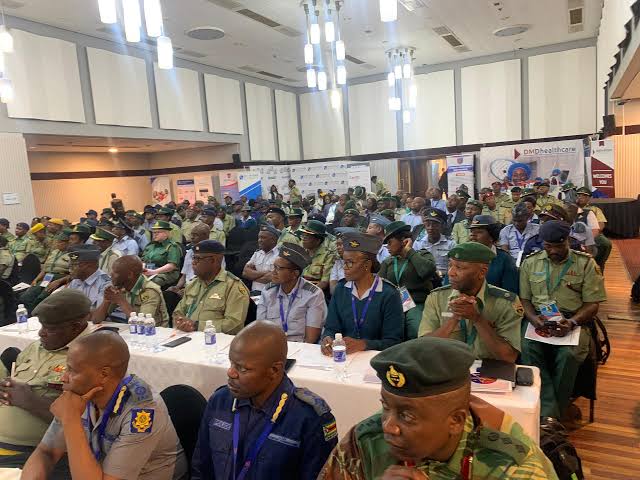
The eighth edition, held in Libreville, Gabon, from 14 to 17 September, brought together 127 participants from 26 African countries, alongside representatives of the United States, NATO, and European partners.
The Armed Forces of Gabon co-hosted the meeting with U.S. Africa Command.
Zimbabwe’s 2026 debut at ASELC was a positive step into a professional military network focused on senior enlisted leadership.
Practical Conversations
Put simply, the country joined a practical conversation with African peers about leadership, training, mentorship, and the systems that help armed forces work effectively.
The opportunity was not about Zimbabwe accepting another country’s military model.
It was about access to African experience, stronger relationships with Southern African Development Community counterparts, and the freedom to consider which lessons, if any, fit Zimbabwe’s own institutions, needs and sovereign choices.
Every army has experienced leaders who work closest to ordinary soldiers.
They help train recruits, pass on professional knowledge, uphold discipline and make sure a commander’s direction is understood in daily work.
Many military systems call them non-commissioned officers, or NCOs. Senior enlisted leaders are the most experienced members of that group.
Their work may not always appear in public discourse, where attention often goes to political leaders, military equipment, and big operations.
But these leaders influence whether young soldiers are well trained, whether standards are understood and whether a force can stay organised when conditions become difficult.
Value For Engagement
Chief Warrant Officer Guy-François Ossinga Ossounda of the Armed Forces of Gabon described their practical value during an interview at the conference.
“We are the ones on the field, and we know how things are done,” Ossinga said.
His point was not that senior enlisted leaders should replace commanders. U.S. Army Command Sergeant Major Garric M. Banfield, U.S. Africa Command’s Command Senior Enlisted Leader, made that distinction clear on Thursday.
“We are not the commanders in our formations,” Banfield said.
“We are here to make this commander better, take his mission statement and his vision, and transmit that down to the enlisted force and those troops that are down on the front line.”
For Zimbabwe, the importance of this kind of forum lies in professional exchange.
Zimbabwean representatives were able to meet counterparts from African countries with different military traditions, security pressures and approaches to preparing enlisted personnel.
African Military Dimensions
That African dimension matters. Zimbabwe was not simply in a room listening to the United States or NATO.
It was alongside leaders from 25 other African countries, including neighbouring, and regional counterparts with their own knowledge, institutional histories and experience.
Banfield said the purpose was not to make every military resemble the U.S. model.
“I am not of the mindset that every model needs to look exactly like the United States model,” he said. “We need to respect what is best for those individual countries and those individual militaries.”
For Zimbabwe, that means the most useful questions are practical ones.
How do other African militaries prepare experienced soldiers to mentor younger personnel? How do they structure career development and leadership education?
How do senior enlisted leaders help commanders maintain training, discipline and readiness? Which ideas can be adapted to local needs, and which do not fit?
The conference cannot answer those questions for Zimbabwe. It can, however, give Zimbabwean leaders direct access to African peers who have faced similar questions in their own institutions.
Zimbabwe’s entry into the forum also took place alongside a notable SADC presence.
Seven of the 26 African countries represented in Libreville were members of the Southern African Development Community like the Democratic Republic of Congo, Eswatini, Lesotho, Malawi, Tanzania, Zambia and Zimbabwe.
That is roughly 27 percent of the African countries at the conference.
In other words, more than one in every four African delegations in Libreville came from the SADC region.
For Zimbabwe, these relationships can matter beyond a single event. SADC countries already share regional institutions and interests.
Direct contact between experienced military leaders can create additional channels for professional dialogue, mentorship and future exchanges on training or leadership development.
The forum has emphasised professional military education and African institutions capable of supporting their own personnel and, where appropriate, neighbouring countries.
Part of its stated purpose is to strengthen African capacity rather than impose a single external model.
The conference programme in Libreville included working sessions, small-group discussions, leadership exchanges, bilateral conversations, cultural activities and joint physical training.
Gabonese personnel led early-morning physical training on two days, creating informal time for delegates to interact outside the formal programme.
Such moments matter because professional relationships are not built only through speeches. They are built when people compare experiences, discuss problems honestly and learn who they can call when they need advice.
Zimbabwe’s presence in Libreville created an opportunity to bring new ideas, contacts and practical comparisons into its own professional-development conversations.
The lasting value will come from how Zimbabwean leaders choose to share useful lessons, strengthen mentorship and training, and build on relationships formed with African counterparts.
That work, if pursued, can continue well beyond the conference itself.
The larger lesson is simple. A country’s security does not rest only on equipment or emergency responses. It also rests on people who are prepared, trusted, and able to lead when it matters.
Zimbabwe joined the conversation in Libreville.
The opportunity now is to shape what comes next for its soldiers.
Pearl Matibe is a Washington, D.C.-based geopolitical analyst and correspondent covering Congress, the Pentagon, State Department, and White House, with expertise in foreign and defense policy.
Follow her on Twitter: @PearlMatibe.