

By Correspondent
There was a time parents had to fight to convince their children to visit rural areas.
Now the same generation is looking back to its roots seeking opportunities.
Zimbabwe’s economy currently requires several streams of income for one to meet the minimum costs.
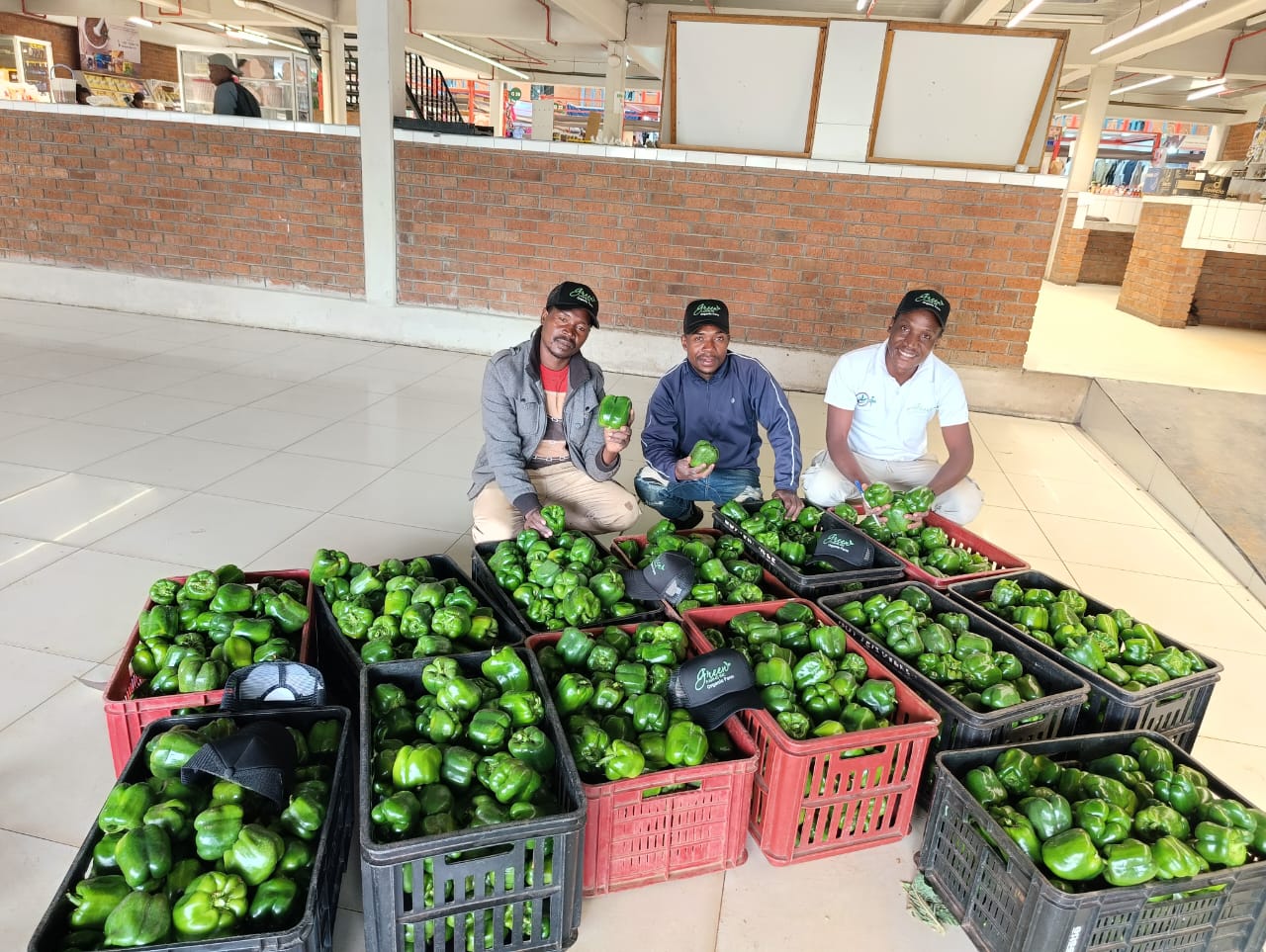
So, young people have turned to agriculture, one of the sectors with comparatively fewer barriers to entry.
With farms difficult to secure, the enterprising have seen utility in rural spaces, establishing projects there.
Those with nearby rural areas have ridden on the advantage and established in areas of familial origin.
Others have engaged local community leaders for what are popularly known as ‘Sabhuku’ deals, to secure small pieces of land for work.
In all this effort, there is no policy support to match the interest in agriculture by young people.
No Quantification of Investment
Sometimes there is a penchant of focusing on Foreign Direct Investment figures and other lofty numbers.
This is done at the expense of local injections made by aspiring farmers into the rural ecosystem.
This is not money from capital vehicles or hedge funds, but hard-earned savings from salaries or remittances from the diaspora.
No one has been tracking their total investment, number of people they have employed or their output.
All of these key statistics are falling through the cracks.
Instead of our Ministry of Finance and Economic Development going on global tours to court investors they must look inwards.
There are ready local investors, willing to collectively direct millions of dollars towards rural spaces.
All these young people need is more support and structure around what they are trying to do; increase productivity.
Difficulty in Getting the Land
Every few weeks, there is a news story of a Government Minister or Local Authority warning people who are settling on rural land.
This inhibits large scale investment, as people will always be risk-averse in the face of possible evictions at some point.
While Section 4 of the Communal Land Act (CLA) vests all rural land in the President, this does not prohibit use.
Use of land for agriculture purposes as dictated by the CLA should be done with the consent of the Rural District Council for that respective area.
The challenge is Rural District Councils (RDCs) seem uninterested in that frontier.
They are largely uninvolved in these rural farming setups.
In the face of what seems like an opportunity, RDCs should provide leadership and harness the interest that continues to grow among the country’s young.
A more sustainable way would be to amend the CLA, to allow legal leasing of rural land for productive purposes.
This should be possible without undergoing multiple bureaucratic hurdles.
Silence in the Rural Industrialisation Plan.
Zimbabwe has a rural industrialisation plan that has been ‘on the way’ for quite some time.
It has been mentioned publicly for over two years now, but is yet to be released.
However, in all its public intimations to date there has not been any mention of the emerging commercial rural farmer.
It is the same old story of supporting the rural farmer with inputs and ‘empowering’ them.
This is not to say traditional occupants of rural spaces should be forgotten.
Instead, this can be an opportunity to drive a model that converts them from subsistence farmers into commercial farmers.
As the plans are still being finalised, there is need to understand how policy can adequately respond to the spike in interest by young people.
Zimbabwe once adjusted policy to accommodate artisanal miners.
It surely cannot be difficult to adjust policy to accommodate aspiring farmers.
A Missed Opportunity to Plan for Orderly Occupancy and Investment
Instead of every village head arbitrarily apportioning pieces of land, at sizes they deem necessary on that day, there could be a centralised and coordinated way of approaching the subdivision of rural land.
Just like with commercial farms, there should be standard sizes of rural portions.
This allows more people access and allows for intensive agriculture where available space is utilized to its full capacity.
If strategically structured, some areas can become Special Economic Zones where there is a coordinated focus area.
Government could then chip in by seeking export markets for whatever would be abundantly produced.
It may not even need to be Government, the private sector itself can identify opportunities when there is order.
Kenya’s world-famous tea is produced by smallholder farmers in rural areas and counties.
These have an average land size of half an acre.
The 720 000 farmers account for about 60% of the total tea produce.
They process their produce and reach the market through the Kenyan Tea Development Agency.
The KTDA is a private company duly dedicated to assisting rural farmers produce marketable tea.
Where Has This Worked?
In Brazil, 71% of their coffee comes from small family farming units in rural communities called fazendas.
Many other jurisdictions, especially in Asia and other parts of Africa have the same model for their crops of specialty.
Zimbabwe, too, can write a global success story by responding to the growing interest in agriculture.
The support extends to expertise too.
Some of the rural areas where families were settled during colonial times were considered the least productive areas.
So, there is need for strong and dedicated extension services as well as data to ensure that plans match the realities on the ground.
While there are agro-ecological zones, they are, in reality, too broad to give someone specific details of what output they can get in Bikita or Mutawatawa for instance.
This growing interest in agriculture is not the magic pill to Zimbabwe’s issues but an orderly process that accepts modest youth investment into rural areas.
It may, to its reasonable extent, create jobs in the rural spaces and inspire development.
Again, it may also open new opportunities that the country currently needs.
In an age where begging and lamenting have become the norm, it is imperative to support those showing ambition and drive.