

By Correspondent
Politicians have a sport they like to play: pretending they care about the people.
The logic is simple: making the people feel loved during election time or when one is just new to the office, and gaslighting them when it’s time to fulfil the text in the oath of office.
Now and then, a government leader makes a statement that shows the true calibre of the people administering the country.
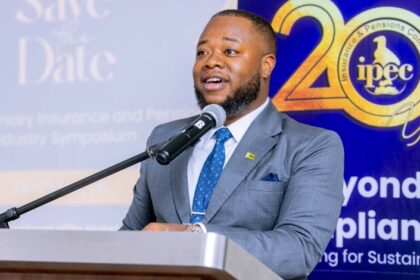
The most recent is Finance and Economic Development Minister, Professor Mthuli Ncube.
According to local newspaper Newsday, Minister Ncube recently urged Zimbabweans to cut back on their driving in the face of rising fuel costs.
These fuel price increases are a result of geopolitical tensions between the United States and Iran.
His remarks, which are a stark reminder of Marie Antoinette’s ‘Let them eat cake’ in the face of bread shortages, are a tough reality check for Zimbabweans.
Sometimes governance throws away the veil of compassion.
Taxes
While Minister Ncube’s remarks may somehow seem like a tough clarion call for people to be practical in the face of intractable difficulty, they are far from that.
Zimbabwe’s fuel has been the most expensive in the Southern African region for a while due to high taxes.
On diesel alone, government taxes amount to 54 cents per litre.
This means that without taxes, diesel prices should be at $1.55 even in the face of the disturbances in Iran.
Every country needs tax revenue to function, and more so if you have a thin industry like Zimbabwe.
However, in the face of global pressure, a caring government should be willing to absorb the changes by reducing its taxes to help the people.
Maybe these high taxes would be pardonable if Zimbabweans were high-income earners, which is not the case.
Huge Disparities
Currently, a teacher can only afford to buy 168 litres of diesel per month, without spending their money on anything else.
It would be acceptable for Minister Ncube to urge Zimbabweans to walk or reduce their driving if there was nothing left to do, not when there is a very big tax component, which is almost a quarter of the total cost.
The government should be willing to subsidise its citizens.
In Zimbabwe, a car is a necessity
The many cars that are in Zimbabwe are a direct response to the country’s dead public transport system.
Running a vehicle in Zimbabwe with high fuel costs, insurance, ZINARA, and the menacing policing in the country is by no means a voluntary exercise; it is a necessity.
If Zimbabwe had reliable, timely public service vehicles, most people would forgo owning a vehicle and free up the disposable income, which could be put to better use elsewhere.
So, when Zimbabweans drive around, it is not because they love to hear the sound of engines or the smell of petrol fumes; they simply want to move around handling their business.
Currently in the Zimbabwean news cycle, there is a story of Tracy Nyamanjina, a young, heavily pregnant woman who died at the hands of thieves who masqueraded as mshikashika drivers.
Many others have faced the same fate; the number is too high for comfort.
People drive around to avoid being victims of our broken transport system, and the Finance Minister should be well aware of this salient fact. In fact, he should be at the forefront of coming up with a solution to this longstanding national blemish.
It may be easier to fix the public transport system than to get people to set aside their pressing personal needs.
A leadership that subcontracts its mandate to citizens
Zimbabweans have long been forced to make alternatives in the face of government failure.
Where power was unavailable, citizens had to make a plan, installing solar systems.
There are neighbourhoods which have not had water for over 20 years; ratepayers have had to rely on boreholes and water purchases.
Where government has failed to provide jobs, people have had to make plans to survive, with some resorting to vending, artisanal mining and contending with xenophobic hate in foreign lands.
The public education system has collapsed due to poor teacher remuneration and poor resource allocation to institutions; parents now incentivise teachers through extra lessons.
Now, on something as basic as fuel, the government still wants the people to ‘make a plan’ on their behalf, by foregoing travel, instead of working to ensure there is affordable fuel.
Zimbabweans have long developed a reputation for being a resilient people; this survival strategy is not for the government to abuse, but it is a trauma response that should not be taken advantage of.
It makes for sad reading that authorities have the temerity to continue expecting a pressured populace to continue making compromises.
When are they going to correct the issues?
A lack of empathy
Good governance and empathy cannot be separated. You cannot find one in the absence of the other.
If you see a leader showing a lack of empathy, know that the principles of good governance have left the room.
Judging from the publicly shared sentiments by those in government, it is no surprise that living in Zimbabwe is increasingly becoming difficult with each passing day.
For motorists, it is even worse. Over the past year, it has become very expensive to be a driver in Zimbabwe.
ZBC license fees were made mandatory, increasing compliance costs by $30 per term.
When the public complained, the listening government reduced license fees by a whopping $2.
Now fuel prices have increased, and the police are out in full force.
This feels like we are back to the dark Chihuri days.
All of these issues plaguing motorists can be solved through empathetic decision-making; however, their absence means more pain for Zimbabweans.
This is what happens when governance removes the veil of care; citizens suffer, and the latest fuel situation is evidence of our current state of affairs.