
By Pearl Matibe in Washington, D.C.
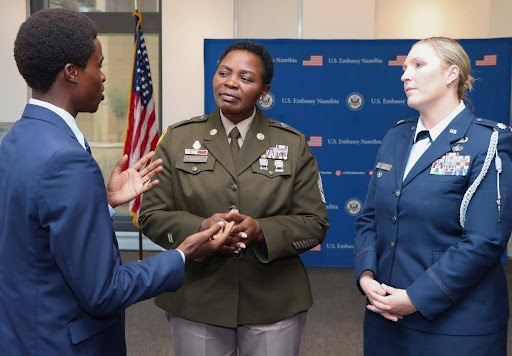
From 22–25 September, AFRICOM chaplains visited Namibia to meet local religious leaders and strengthen community resilience. The delegation was led by U.S. Navy Cmdr. D. Anthony Baker, AFRICOM Deputy Chaplain, and Sgt. Maj. Herinah Asaah, AFRICOM Chaplain Senior Enlisted Leader.
The visit included interfaith dialogue at the U.S. Embassy, engagement with the Namibian Defence Force, and support to embassy personnel. The goals were clear: to foster “interconnectedness,” “enhance resilience,” and “promote cooperation” between Namibia and the United States.
This simple but powerful engagement marks a shift in approach. Instead of weapons or hard security, AFRICOM focused on faith-based cooperation. In Namibia, community resilience was placed at the center of U.S. engagement.
For many Namibian participants, the visit wasn’t about politics or military strategy. It was about relationships. Interconnectedness meant linking communities that rarely sit at the same table. Resilience meant helping young people and local leaders handle stress, trauma, and rapid social change. Cooperation meant working with Namibia—not over it—to build long-term strength.
The chaplains’ sessions focused on how faith communities can support young people facing unemployment, pressure, violence, and emotional strain. At a moment when many Southern African youths feel unheard, the conversations felt fresh—and necessary.
A standout moment was the interfaith roundtable. “Central to their visit was a religious roundtable discussion held at the U.S. Embassy on September 24. The session brought together Namibian religious leaders from various faith traditions to discuss resilience, healing, and the role of faith in addressing societal challenges. While NDF chaplains were unable to attend, the roundtable provided a platform for building relationships and paving the way for future engagement,” said AFRICOM on Thursday.
Both the American chaplains and Namibian leaders agreed on one core message―Faith-based organizations play a critical role in addressing trauma.
In a region coping with the long tail of historical trauma, economic pressures, and social shifts, this message landed strongly.
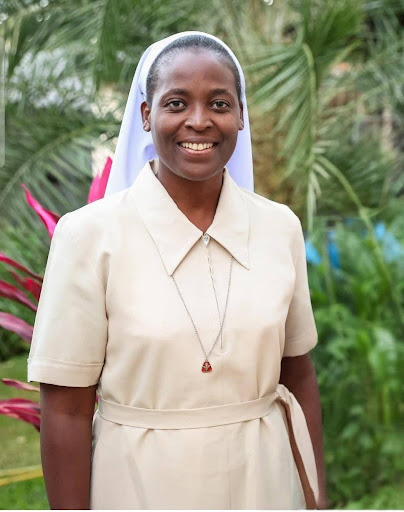
Namibia is not alone. Across Southern Africa, faith-based diplomacy is gaining ground—and producing real results. In Zambia, the country’s global visibility rose after Sr. Juunza Mangwani, of the Religious Sisters of the Holy Spirit of Mazabuka―about 150 km south of the capital city Lusaka―won the 2025 Opus Prize, a major humanitarian award worth US$1 million. Her work helps rural families, especially young women, build livelihoods through entrepreneurship. Zambia’s Ambassador to the United States shared his reaction online after meeting her. He said, “The Sisters’ work in the Magoye area earned them the prestigious 2025 Opus Prize Laureate.” He added, “Listening to her experiences with young women convinced me that, when I have another opportunity, I will need to spend more time with the village community—teaching them about business!” Her recognition highlights a broader truth. Local faith leaders often deliver the most effective resilience solutions.
While Namibia and Zambia showcase positive cooperation, Nigeria’s situation tells a different story. In Kwara State, schools have closed after the kidnappings of schoolgirls. President Bola Ahmed Tinubu postponed attending the G20 to intensify rescue efforts. In Washington, alarm is growing. Senior U.S. official Jonathan Pratt told the House Foreign Affairs Committee.
“The Trump administration is developing a plan to incentivize and compel the Nigerian government to better protect Christian communities and improve religious freedom.”
Some in U.S. leadership have raised the possibility of sanctions—or even military response—if conditions worsen.
It’s a stark reminder that while West Africa struggles under real security threats, Southern Africa’s faith-driven cooperation is becoming a model for peaceful engagement.
Security is not always only about borders or armies. It’s about community trust, mental health, spiritual strength, and youth empowerment. AFRICOM’s work in Namibia reflects a shift toward non-kinetic cooperation—helping societies stay strong before crises break them down. It also aligns with a broader message often heard from Washington, “peace through strength.” Strength, in this case, is built through dialogue, not force.
At the end of the event, a U.S. Embassy political specialist described the response, saying, “The religious leaders expressed deep gratitude for the discussion, describing it as therapeutic, enlightening, and powerful.”
That reaction captures the real story. Faith-based cooperation can help maintain stability.
For AFRICOM’s chaplains, the mission was clear. Strengthening human connections, supporting local leadership, and helping communities—including young people—builds resilience that lasts.
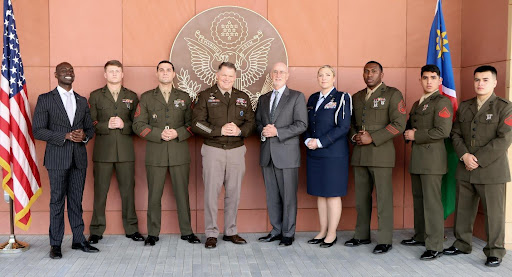
Separately, earlier this year, Lt. Gen. John W. Brennan, AFRICOM’s Deputy Commander, visited Windhoek (21–22 July) with U.S. Ambassador Robert Scott― Deputy to the Commander for Civil-Military Engagement―to deepen U.S.–Namibia security cooperation.
Brennan met Namibia’s Minister of Defence, Frans Kapofi, and said, “Namibia plays an important role as an anchor for fostering stability in southern Africa.”
Their talks covered maritime security, joint training, and countering trafficking in wildlife and timber. Brennan also warned of regional threats—including jihadist groups and cartel networks—and emphasized preventive cooperation, not intervention.
His visit reinforced AFRICOM’s long-term commitment: “peace through strength.”
Pearl Matibe is a Washington, D.C.-based geopolitical analyst and correspondent covering Congress, the Pentagon, State Department, and White House, with expertise in foreign and defence policy. Follow her on Twitter: @PearlMatibe.