
By Correspondent
Speaker of Parliament Jacob Mudenda has challenged Parliament to assert its oversight role by forcing the 2027 National Budget to meet international spending thresholds for health and education.
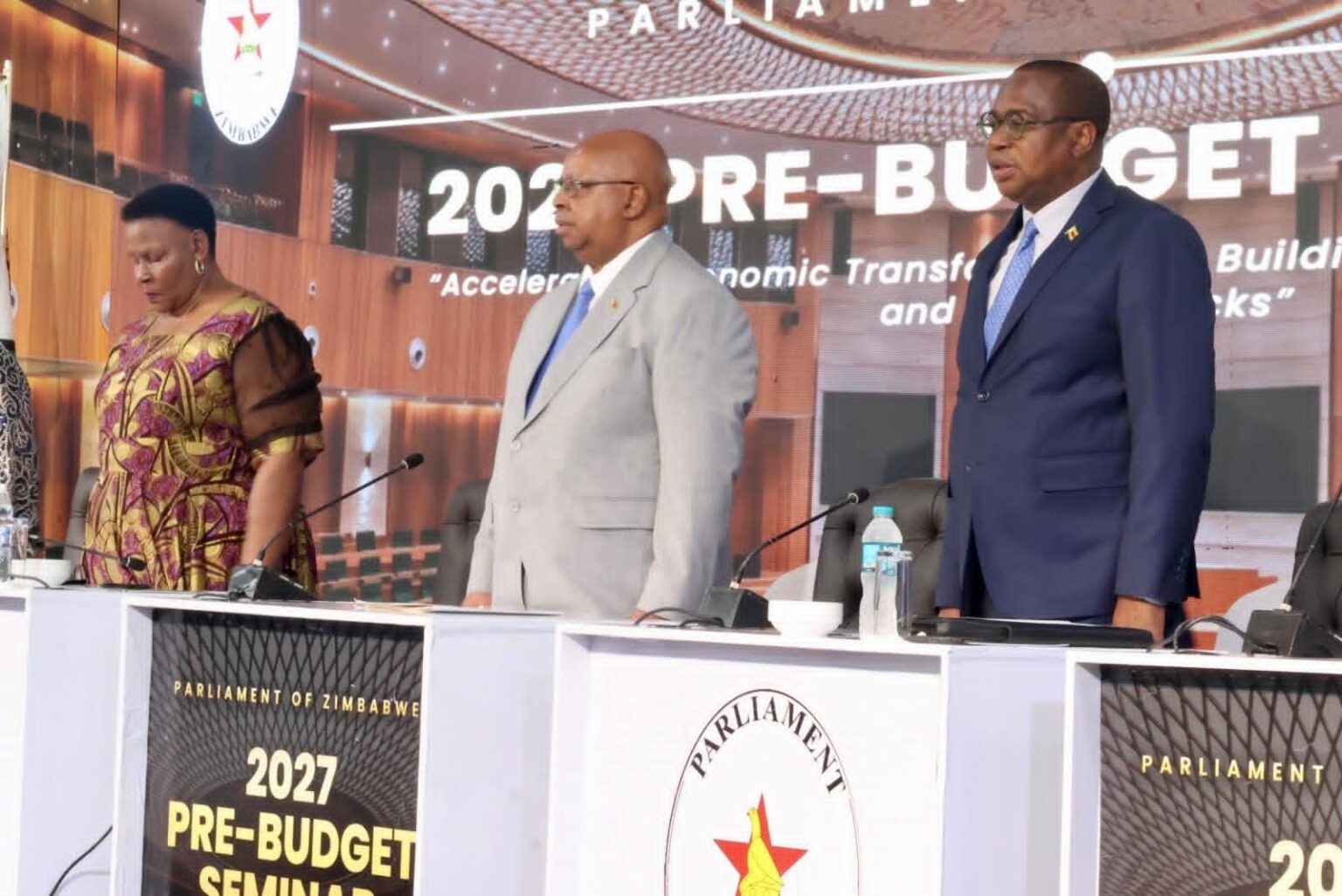
Mudenda was speaking during the official opening of Parliament’s 2027 Pre-Budget Seminar in Victoria Falls.
He urged MPs to also demand full accountability for billions raised through sugar tax and health levies.
Mudenda said Treasury can no longer ignore benchmarks Zimbabwe has voluntarily signed up to.
Benchmarks
“We have the Abuja Declaration which requires at least 15% of the national budget to go to health.
“We have the Education 2030 Framework for Action which requires 15% to 20% to education.
“You must ensure that allocations to both sectors advance fulfilment of the benchmarks to which Zimbabwe has subscribed,” he said.
He warned that without decisive investment, Zimbabwe will fail to build resilience to climate and economic shocks, particularly for vulnerable rural populations.
Education
On education, Mudenda went further, calling for a specific vote for age-appropriate Artificial Intelligence literacy and a deliberate plan to close the digital divide.
“It is not enough to talk about AI in Harare.
“Rural communities must not be left behind in internet penetration and AI literacy if we are to prepare our children for the future economy,” he said.
The Sugar Tax Storm
The Speaker’s call for more money to social sectors dovetailed with explosive revelations from last week’s public budget consultations in Harare.
MPs questioned where health levy money is going.
According to submissions before the Portfolio Committee on Health and Child Care, beverages giant Delta Corporation alone paid US$32 million in sugar tax in 2024.
US$32.1 million was paid in March 2025, and US$30 million in March 2026.
These funds are part of a wider health levy basket that includes tobacco levies, health insurance levies and sin taxes.
Yet, MPs heard that Parirenyatwa and Mpilo Central Hospitals still require patients to purchase their own orthopedic implants.
Hospital Crisis
Prices for these range from US$4,000 to US$8,000 per implant.
Currently hospitals face chronic shortages of drugs and sundries.
“Citizens pay seven to eight health-related levies at the till, but only one reaches the sector.
“We need traceability.
“If a Zimbabwean pays sugar tax on a drink, they must see it become an implant, a cancer drug, or a working theatre,” said one MP during the consultation.
The Committee also demanded that Treasury ring-fence all health levies and channel them through a transparent Health Fund managed jointly with NatPharm.
The Bulawayo retreat will conclude on Saturday with a consolidated Parliamentary Position Paper.
It will contain binding recommendations for the Finance Minister.
The 4-day retreat is running under the theme “Accelerating Economic Transformation and Building Resilience to Climate and Global Shocks.
It is bringing together Finance Minister Prof. Mthuli Ncube, Reserve Bank Governor Dr. John Mushayavanhu, Committee Chairpersons, and development partners to shape the Budget before its presentation to Parliament on 19 November.
———————————————————————————————————
Love what we do? We’re dedicated to opening up democracy, one article, video and story at a time. If you find our reporting helpful, you can support the Magamba Network team by buying us a coffee. It’s quick, easy, and makes a real difference!
———————————————————————————————————