

By Correspondent
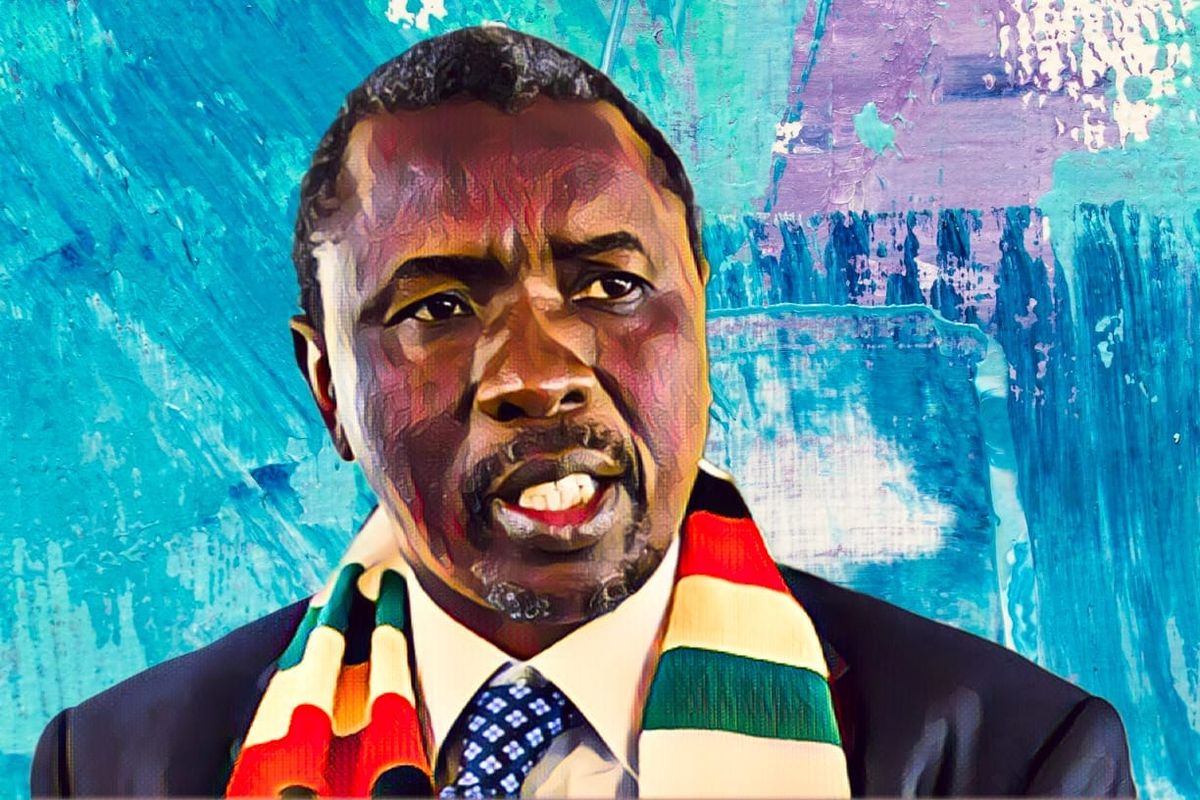
When President Emmerson Mnangagwa appointed Kudakwashe Tagwirei as Minister of Economic Development and Investment Promotion on October 8, he was not filling a vacancy.
He was making a statement about where power in Zimbabwe now lies, and to whom the future belongs.
An Uneasy Diarchy
For two years Zimbabwe has lived with an uneasy diarchy.
On one side stands Vice President Constantino Chiwenga, custodian of the gun and of the mythology of November 2017, who believes the presidency was promised to him as the final dividend of Operation Restore Legacy.
On the other stands the President himself, now 84, intent on stretching his rule to 2030 through constitutional engineering and determined not to hand the state to the generals who made him.
Tagwirei is Mnangagwa’s answer to that dilemma.
The man once derided as the Queen Bee of Zimbabwe’s fuel queues has been transformed, with astonishing speed, from tenderpreneur to Senator to Cabinet Minister.
Last year he entered the Central Committee borne on a fleet of luxury vehicles for party grandees.
This year he entered Parliament through a newly created appointed seat under Constitutional Amendment Three.
Now he sits in Cabinet, entrusted with the very agency, ZIDA, that must sell Zimbabwe to foreign capital, despite being under American and British sanctions for corruption.
To understand the magnitude of this provocation, recall what happened in the Politburo in 2025.
Chiwenga arrived with a dossier accusing Tagwirei of having looted over US$3 billion that allegedly belonged to ZANU-PF itself, through a secret forty-five percent party stake in Sakunda Holdings held in trust.
He demanded arrests.
The party’s legal secretary Ziyambi Ziyambi called the dossier treasonous and countered that Tagwirei had bankrolled the 2017 coup itself.
Chiwebga tried again!
He attempted to block Tagwirei’s elevation to the Central Committee but was overruled.
The recent appointment to Cabinet is that overruling made fresh.
What Mnangagwa is doing is classically authoritarian but novel for Zimbabwe.
Building A Counter-Establishment
Unable to dismiss a Vice President who commands the security establishment, he is building a counter-establishment founded on money rather than on camouflage.
Chiwenga offers the loyalty of the barracks.
Tagwirei offers the loyalty that money can buy: fertiliser for the peasant, vehicles for provincial chairmen, fuel for the state, and the financial infrastructure behind ED2030.
In elevating Tagwirei, Mnangagwa is signalling that the ruling party’s centre of gravity is migrating from the war veteran to the tender baron, from liberation legitimacy to commercial patronage.
The implications for the Republic are profound.
First, the very idea of investment promotion is rendered contradictory when the promoter is himself a sanctioned person.
Western capital, already skittish, will read this as a pivot towards capital that does not ask questions.
Second, the state and Sakunda, long accused of being indistinguishable in fuel, mining and agriculture programmes, are now formally indistinguishable.
The regulator has become the regulated.
However, most critically, the move forecloses the internal, constitutional resolution of ZANU-PF’s succession.
By making Tagwirei a Minister, Mnangagwa has told Chiwenga that party processes will not restrain capital, and that capital can become the party.
When a political system closes all internal exits for a faction that believes it owns the state by right of conquest, it invites that faction to consider an external exit.
Zimbabwe has seen that film before.
——————————————————————————————————-
Love what we do?
We’re dedicated to opening up democracy, one article, video and story at a time. If you find our reporting helpful, you can support the Magamba Network team by buying us a coffee. It’s quick, easy, and makes a real difference!
Buy us a coffee here ☕
————————————————————————————————————