
By Correspondent
A government threat to launch a “zero-tolerance” operation to clear illegal street vendors from Harare’s city centre appears to have been softened, after officials announced a formalisation drive and an amnesty for traders.
On 2 September, Local Government and Public Works Minister Daniel Garwe gave vendors operating in undesignated areas seven days to leave.
He warned that a nationwide clean-up was imminent.
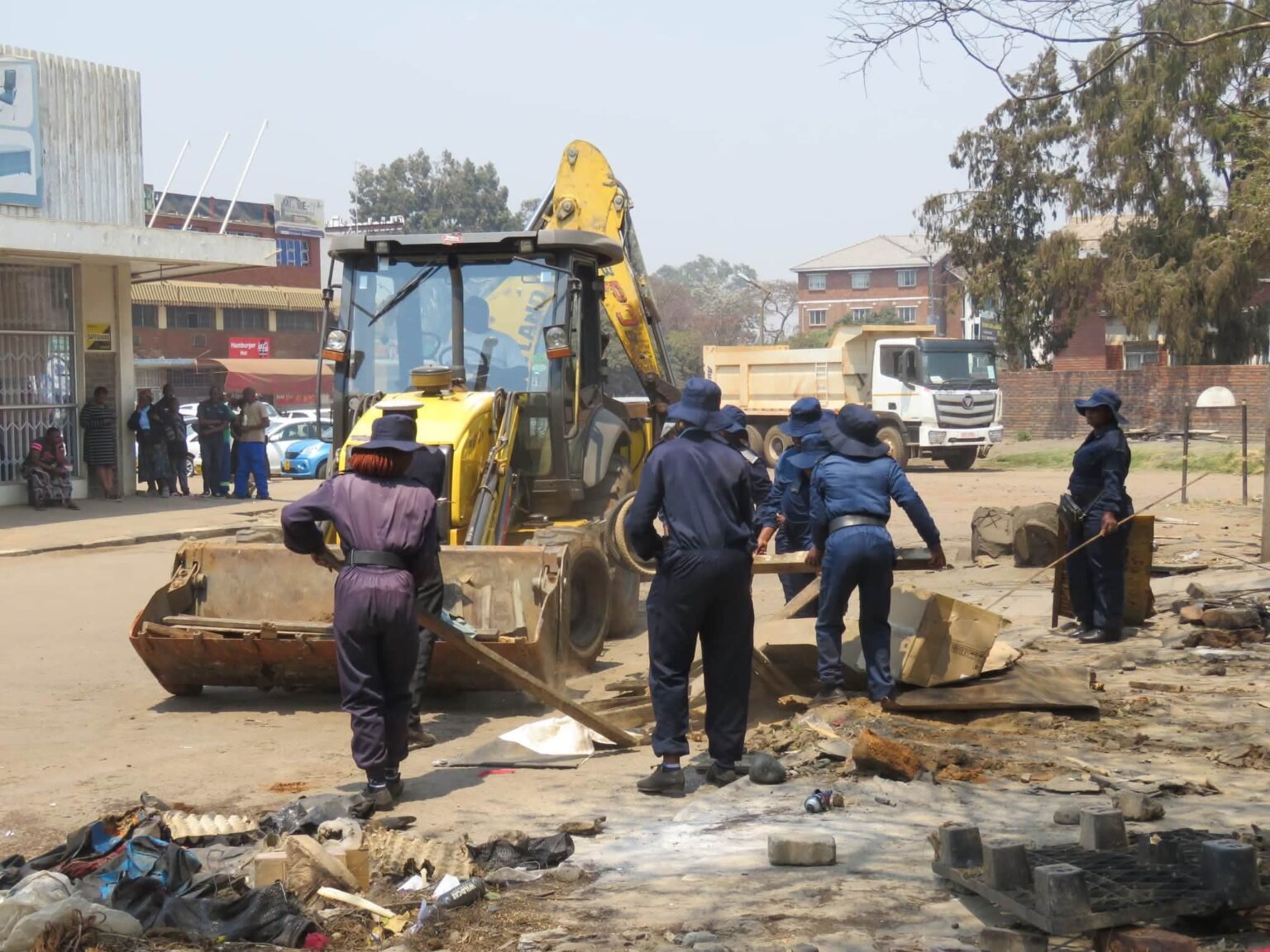
“During this operation, all illegal vending structures, stalls and sites will be completely disbanded.
“Municipal police will remain deployed to ensure that cleared areas are not re-occupied.
He described the current state of street trading as disorderly and said it had “become a threat to the health and security of our nation”.
However, more than a week after the 9 September deadline, authorities have adopted a different tone.
New Cabinet Resolution
Following a Cabinet meeting this week, the government said it would instead launch a 60-day one-stop formalisation exercise for Harare vendors.
It said it would grant them a 30-day amnesty for those in other cities and towns to regularise their operations.
Under the revised plan, local authorities are to upgrade 100 vending sites in Harare suburbs with water, ablution facilities, lighting and waste management.
It will also identify land for a new satellite market on the edge of the central business district.
Officials also said formalised vendors would be linked to financial institutions for working capital.
A Harare Vendors Council will also be created.
A Complex Urban Challenge
The shift reflects the difficulty of balancing public order with livelihoods in one of the world’s most informalised economies.
The Permanent Secretary in the Ministry of Information, Nick Mangwana, defended the original order but said it needed to be seen in context.
“The debate over vendor relocation is a complex urban challenge.
“While street trade is a vital source of income and an integral part of the retail sector globally, cities must balance this with public health and safety.
“The goal is not exclusion but creating sustainable infrastructure that supports commerce while maintaining clean, accessible public spaces for all”.
Enforcement Difficulties
Officials have acknowledged enforcement has been uneven.
Vendors cleared during the day have returned at night to trade, prompting talk of a separate night operation.
In Chitungwiza and Ruwa, two dormitory towns, local authorities quietly extended their own clearance deadlines beyond 9 September.
The government has urged informal traders to use the current window to comply voluntarily.
It has warned that failure to do so could still result in loss of merchandise during enforcement operations.
No detailed public schedule has been released showing how many traders will be registered or whether existing markets have enough capacity to absorb them.
———————————————————————————————————
Love what we do?
We’re dedicated to opening up democracy, one article, video and story at a time. If you find our reporting helpful, you can support the Magamba Network team by buying us a coffee. It’s quick, easy, and makes a real difference!
————————————————————————————————————