
By Correspondent
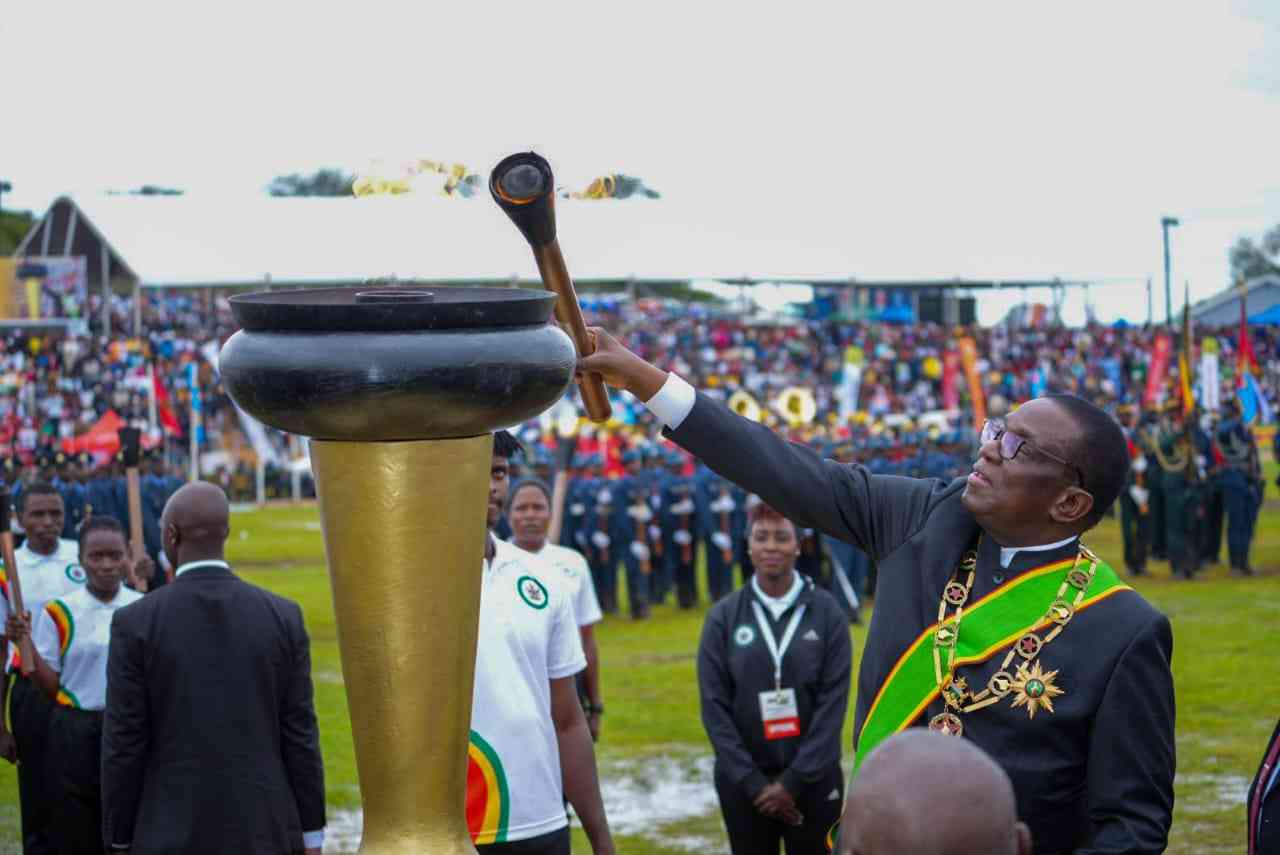
Zimbabwe celebrated its 46th independence last week, a milestone in all measures.
The usual polarity obtained, youths utilised the day to lament broken dreams, while those sympathetic to the government of the day used it for state-curated patriotic history purposes.
As with all the years that have passed, grand independence celebrations were held, this time in Maphisa, a town in Matabeleland South.
Other smaller events were held in different districts across the country.
For many years, especially under Robert Mugabe’s rule, it was known that national independence celebrations were held at the National Sports Stadium in Harare.
The new dispensation came with a new approach, taking flagship independence celebrations across the country, ‘in line with devolution’.
Ideally, the proposition sounds reasonable; everyone gets a chance to experience the important national ceremony.
There is a degree of equity to the concept.
However, the execution of the devolved celebrations has left a lot to be desired.
Five years in, the implementation does not seem to be becoming more efficient.
A lack of planning
Every year, as the day approaches, you start reading stories about venue readiness.
This year, with less than five days to go, there were reports being written by state media that preparations are 80% complete.
What this meant is that the structures and works ended up being done to ensure they are done before the leadership arrives.
This can have a bearing on the quality, as people end up racing to finish rather than having a comfortable project time, which allows for proper review of work and rectification.
From as far back as May 2025, it was known that Matabeleland South would be hosting the 2026 independence celebrations.
The preparations should have started then, but somehow, Cabinet approval for Maphisa came in February 2026.
One then wonders, if Matabeleland South was known to be the next hosts from as far back as May 2025, what was the reason for delaying the final decision that resulted in Maphisa only being announced as the host area nine months later?
The decision of zeroing in on a specific area should be easier than the decision to pick the province.
Independence celebrations are no longer just an event; under the current structure and design, the host area gets development projects.
Development As A Direct Benefit
For this year, these projects included road refurbishment, new classroom blocks for Mahetshe Primary school, which included a new science laboratory and staff housing.
Matobo District Hospital was being refurbished, with upgrades to the school of nursing and establishment of the Joshua Mqabuko Nkomo Vocational Training Centre (VTC).
There was also a promise to drill 12 boreholes through the Zimbabwe National Water Authority (ZINWA).
These projects are important; they can significantly improve lives in Maphisa or anywhere they are earmarked.
It is unhelpful to execute them under pressure or treat them as an afterthought.
If they are as important as they are framed to be, why are they not given the ample time they duly deserve?
We have seen arts festivals secure venues years in advance; our administration can be inspired by such planning.
By now, preparations for the next independence program must be underway, to ensure a patient, orderly and strategic execution of these projects that are intended to improve lives.
Breeding white elephants
Good sustainable development is often characterised by a plan for the future.
There is an obsession with launching new things, probably to make the leadership look good when officiating.
However, there does not seem to be a matching interest in maintaining and operationalising them.
As the development work surrounding these events becomes more orderly and coordinated, it would be useful to get impact updates on these projects.
What became of the Pfura Stadium in Mount Darwin?
How has the Mt Darwin community benefitted from its existence since 2023?
The danger in not getting post-event accountability is that it is easy for these facilities to become white elephants.
In Harare, many stadiums have been left to rot.
There is Chibuku Stadium in Chitungwiza, Zimbabwe Grounds in Highfields, Warren Park Stadium and Dzivarasekwa Stadium, to mention just a few.
Zimbabwe has a long history of infrastructure that has been left to rot, and it would be a national travesty if these refurbished local stadiums end up joining that list.
Forward Plan
There must be due care to avoid a top-down approach, where infrastructure needs are pronounced from Harare, and communities avoid using them because they do not speak to their direct realities.
Are these projects being informed by research and baseline studies?
There must be a data informed criteria to how each community is getting priority projects.
It may be futile to build a vocational training centre for a community that desperately needs a clinic or dip tanks.
Community needs must take priority, so as to ensure the people are not relegated to mere bystanders in the development process.
When the big boys descend on Maphisa
As administrative hygiene, there must be an audit on how much is spent in the run-up to the day and on the day, on transport and logistics.
Everyone who wants to curry favour with the Presidency makes the trip to the venue, at the taxpayer’s expense.
This is from parastatal bosses, parliamentarians (who are supposed to be attending celebrations closer to their constituencies) and senior government workers who make the great trek to where the leadership will be, to show face.
If we collate the fuel, accommodation and allowances drawn by these top figures to attend these events, where they spent the day sitting in a tent feeling important, we can buy medication for two or three small clinics for the whole year.
While there are those critical for the functioning of the event and those that are truly useful, there should be some discipline around the use of national resources.
Most institutions have regional offices in areas where these events are held.
Thus, the local teams entrusted to run things should have enough representation at national events that are close to them.
There is no justification for a parastatal head to fly to Bulawayo, book an executive hotel room, get a SUV to drive to Maphisa to sit in a tent when there is a senior staffer manning the Bulawayo office.
The big boss mentality and the eagerness to show face are coming at a high cost to the taxpayers.
A faux attempt at symbolising devolution
Devolution is a legal expectation in Zimbabwe, as per the constitution.
Section 3(2)(1) of the Constitution states that devolution and the decentralisation of government power signify the national expectation of good governance.
The expectation becomes more pronounced further in the constitution under Section 264, which states that there should be devolution of government powers and responsibilities.
Provincial councils and local authorities should be in charge of key developmental activities in their jurisdictions.
While these independence celebrations look like they are devolution-inspired, there should be more effort to implement what the law expects of the country as far as devolution is concerned.
Up to now, 13 years after the passing of the current constitution, Provincial Councils have yet to be established.
This means that a key component of the devolution matrix is still missing.
No amount of roadshow-themed celebrations can make people forget that the idea of devolution is yet to be implemented in letter and spirit.
Local authorities are not yet in charge of their budgets and planning.
They still have to wait for central government consent, even when it comes to the employment of senior executives.
While the decentralisation of events is welcome, the real devolution should be implemented, as was intended by the law through the constitution.
Quality control
The quality control in all public works should be strengthened.
It’s either that the professionals are misleading the national leadership or we are witnessing grand-scale incompetence, especially with these national events.
In the run-up to Independence Day in Maphisa, it was foreseeable that there would be rains, even forecasts pointed to the fact.
After inspections of the stadium on April 16, Local Government Minister Daniel Garwe promised that drainage challenges which had plagued the Gokwe celebrations in 2025 would not be repeated.
In 2025, the independence celebration football match turned into a national embarrassment as players had to play on a waterlogged pitch.
Ordinarily, sporting spectacles are supposed to unite people in national pride, but the game turned into an immediate episode of shame.
The expectation, from citizens and government (if Minister Garwe’s remarks are anything to go by), was that there would not be a repeat of such an infrastructure failure during this year’s celebrations.
Two days later, after Minister Garwe’s assurances, the independence game between Scotland and Highlanders had to be abandoned after 40 minutes due to pitch drainage issues.
It has rained earlier in the morning.
Maybe now is the time for a review of how we handle national events, and maybe rope in private players who have successfully handled similar assignments.
Important national events must be given the credence it deserves.
The best way to show seriousness is through proper planning, execution and post-event maintenance.