
By Correspondent
The 2017 factional battles that culminated in the entrance of the current administration pitted Lacoste against G40.
Lacoste members included Mnangagwa, then Army chief Chiwenga, war veteran Victor Matemadanda, Monica and Chris Mutsvangwa, independent MP Temba Mliswa, Mayor Wadyajena, Josiah Hungwe, current Parliament Speaker Jacob Mudenda and many others.
Meanwhile, G40 had the likes of Grace Mugabe, Saviour Kasukuwere, Mugabe’s nephew Patrick Zhuwao, then Tourism Minister Walter Mzembi, then Higher Education Minister Prof Jonathan Moyo, Ignatius Chombo, Kudzai Chipanga, ZRP Commissioner Augustine Chihuri and many others within the system.
It was a finely partitioned battle with neither side having a clear advantage over the other.
Which is very much unlike today.
While G40 had the backing of President Mugabe and his supposed heir and wife, Grace Mugabe, it was ultimately defeated as Lacoste’s Mnangagwa assumed power, backed by the Army.
False Victory
However, the fascinating feature of that internal division was how the rest of the country ended up joining camps.
Many, aggrieved by Mugabe’s 37 years in power, sided with Lacoste and hailed the army-backed victory as a form of liberation.
The sights from the celebratory day when Mugabe finally stepped down mirrored the exultant 1980 scene of independence day.
A letter from Mugabe, read out by the Speaker of Parliament, said the decision was voluntary and he had made it to allow a smooth transfer of power.
The news abruptly halted an impeachment hearing that had begun against him.
While the Constitution dictated that his successor should be the then Vice-President, Phelekezela Mphoko, it was not to be.
Then Zanu-PF chief whip Lovemore Matuke told Reuters news agency that Mr Mnangagwa would be in office “within 48 hours”.
UK Prime Minister Theresa May said Mr Mugabe’s resignation “provides Zimbabwe with an opportunity to forge a new path free of the oppression that characterised his rule”.
Opposition leader Morgan Tsvangirai told the BBC he hoped that Zimbabwe was on a “new trajectory” that would include free and fair elections.
He said Mr Mugabe should be allowed to “go and rest for his last days”.
There was hope for a new beginning, but that would fade within a few days as ZANU-PF defaulted to its true settings.
The opposition slunk away with nothing.
A Moment of De Javu
Nine years down the line, the country finds itself fiddling with an almost similar scenario where people are taking camps amidst the factional divisions which have erupted within ZANU PF again.
Unlike the G40-Lacoste battle that was evenly distributed in terms of power, the current divisions between President Mnangagwa and his Vice President Chiwenga appear one-sided.
Since his exit from the Army, Chiwenga’s camp has barely posted any significant political victories.
It’s a camp that has been systematically whittled down to a point where he is now resorting to foraging for runners from Retired army pals.
The use of Bombshell Geza, a stuttering octogenarian, to rouse the public into an uprising was the ultimate manifestation of a camp that is seriously deficient in personnel.
The Chiwenga camp is seriously intent on framing itself as a military-backed outfit, maybe to conjure visions from 2017, but that has so far failed to work.
It continues to look lethargic in terms of scope and frantic in the interim as events continue to escape its grasp.
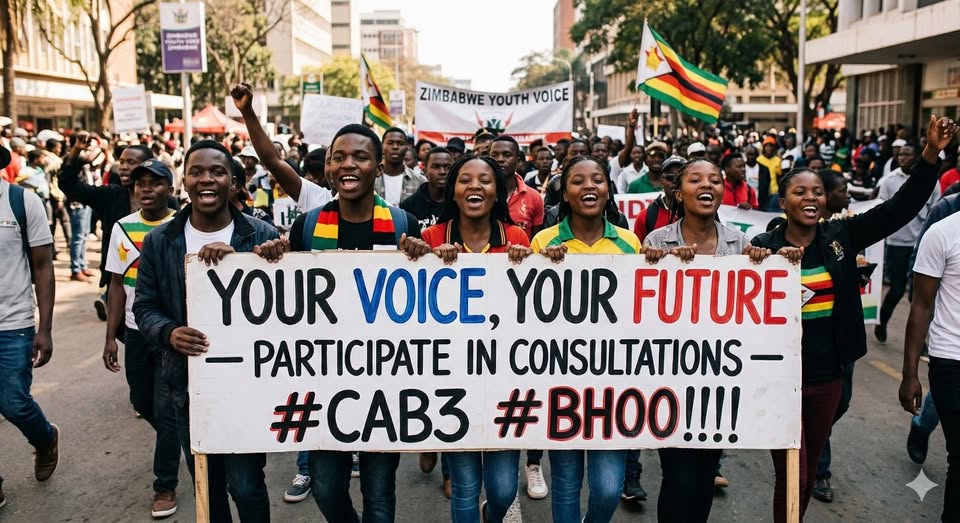
Convenience of Constitutional Amendment Bill 3(CAB3) Narrative
It is in the midst of these struggles that the Constitutional Amendment Bill has come in, and the Chiwenga camp has latched on to it.
They have discarded their formerly preferred framing as a military-heavy faction and chosen the pristine outfit of a grouping of liberation heroes intent on realising the dreams and ethos of the liberation struggle.
All of a sudden, one of the 2017 coup leaders has become the preeminent democratic figure protecting the country’s Constitution.
In their letter to Parliament, the Rtd Generals led by Muchena, couched themselves as constitutionalists.
They said the liberation struggle rested on two fundamental pillars: land and universal adult suffrage, “one man, one vote.”
“These were not negotiable then, and they must not be negotiable now,” the submission said.
“The party does not reshape itself around the appetites of its leaders.
“Leaders reshape themselves around the values of the party and the will of the people.
“In 2000 Parliament did what was true and correct by referring constitutional proposals to the people through a referendum,” they said.#
“The people rejected our proposal, and we accepted the outcome.”
They also cited the adoption of the current constitution in 2013, which followed years of consultations during the Government of National Unity.
If the proposed amendments are truly in the national interest, they said, they should be put to the people again.
“Call a referendum,” the group urged.
“Let the same Zimbabweans who gave us that constitution speak again.”
The Illusion of Heroes
While brimming with all the right-sounding factors, this move by a group identified with the Chiwenga faction is the latest about-turn towards a new gimmick in the factional fight.
These are the same people who worked to prop up Mugabe during his 37 years in power.
That they can suddenly swivel and project themselves as Constitutionalists ready to defend the constitutional integrity of the country is a hard sell.
It’s a clear illusion.
Still, the move has indeed found resonance with many across the general public.
Many now view Chiwenga as the hero who can rescue the country from the hands of President Mnangagwa.
However, memories of 2017 should be recounted so that similar mistakes are not repeated in the stampede to remove the status quo.
The whole group is tainted and possesses no iota of constitutionalism for the people to join any one side.
All that the winner will do is use the numbers and optics of the public to arm-wrestle power from the opposite camp….
Then dump the whole lot!