

By Correspondent
Recent amendments to the Broadcasting Services Act making it mandatory to get a radio license before acquiring motor vehicle licences and insurance policies are an infringement on people’s rights to information according to the Zimbabwe Human Rights Commission (ZHRC).
The organisation said the precondition for the license before one can acquire an insurance policies also infringes fair access to information on the market.
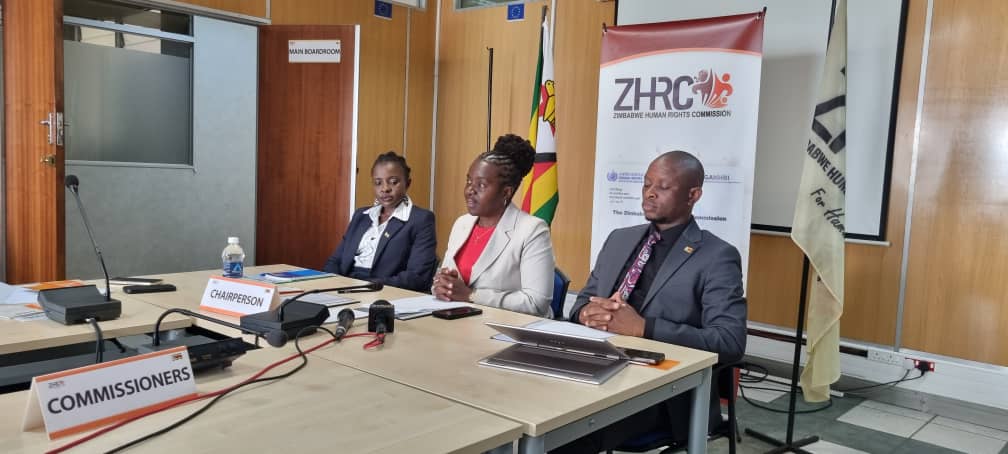
The Chairperson of ZHRC Jessie Majome warned that the statutory linkage between the radio licence and vehicle licensing forces motorists to financially support a state broadcaster they may not use.
She said it also undermines principles of choice and equal access to information.
“The provision in the Broadcasting Services Act (Chapter 12:06) that conditions the issuance of motor vehicle licenses and insurance policies on the possession of the Zimbabwe Broadcasting vehicle radio license forces people to financially support the State-run broadcaster even when they do not necessarily listen to ZBC radio channels.
“This infringes the right to information and principles of fair access to information on the market,” said Majome.
Majome was presenting the Commission’s statement ahead of Human Rights Day.
Advent of New Law
The controversial provision was introduced in the Broadcasting Services Amendment Act No. 2 of 2025.
It was gazetted in May and brought into operation in mid-July by Statutory Instrument 73 of 2025.
The amendment requires that the Zimbabwe National Road Administration (ZINARA) and motor insurance companies may only issue motor vehicle licences and insurance policies to applicants who hold a current ZBC radio licence or an exemption certificate.
That is unless the vehicle is proved not to be fitted with a radio receiver. Media human rights organisations and opposition figures have also criticised the new law.
They argue that it effectively forces citizens to subsidise a broadcaster that many consider partisan and of declining relevance.
Others have pointed out that motorists who primarily use the internet, independent media or social platforms for news will nonetheless be required to pay the annual fee.
The payment has also been criticised for being too expensive.
Concerns on Private Voluntary Act
Majome also expressed concern over Private Voluntary Act which she said poses restrictions on civil liberties.
The PVA (Chapter 17:05) amended this year, now provides the legal framework for registering, regulating and monitoring non-profit entities.
It also introduced far stricter government controls.
The revised law broadens the definition of PVOs, increases state oversight and imposes heavier penalties for non-compliance.
Under it all organisations are required to re-register under more demanding governance and financial reporting requirements.